book, Book Publishing, Music, News & Publishing

The rock-n-roll beat

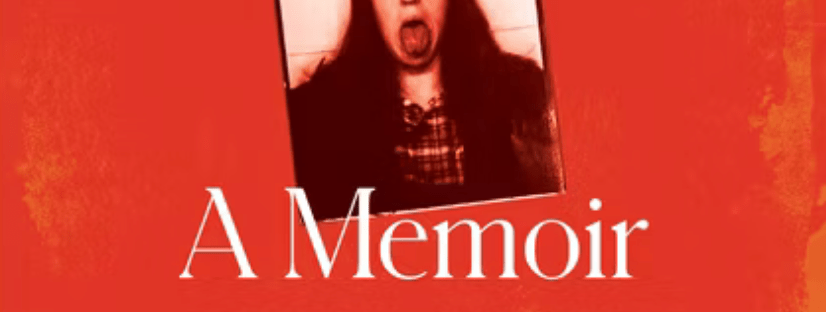
If you’re a journalist who likes to see other journalists’ approach to the craft, I recommend Cameron Crowe’s autobiographical “The Uncool: A Memoir.” Crowe is a fascinating person. There is his undeniable storytelling talent, proven by his many decades as an accomplished music journalist, screenwriter and director.

There’s his encyclopedic knowledge of music from the 1960s-1980s — and perhaps beyond. There’s his almost Forrest Gump-like fortunes and happenstances, where he casually meets and vibes with so many important figures of those decades, from the worlds of music, industry, Hollywood. It’s a collage of pop culture.

The reader gets a sense of Crowe’s perspective on journalism, and the lessons he learned from mentors along the way. He wrestles with editorial dilemmas and relationships with sources. You sense the pressures he felt answering to editors, rock stars, publicists and readers — especially remarkable when he was a teenage reporter. That kid (then) had precisely what it takes to make a name, to build a byline and a brand: courage, resilience, introspection, fortitude, a great vocabulary, an inquisitive nature, and a little dash of naïveté.

The author says this is a story about family. Crowe’s family takes center stage throughout the book. Their connections are complicated, and he doesn’t sanitize them. He peels back the curtain on their shared tragedies and idiosyncrasies. It’s all relatable.

Naturally, in the memoir there’s the running theme of Crowe’s early life, which he so astutely, delicately captured in the semi-autobiographical film, “Almost Famous.” That is, his absolutely passionate love for music and reverence for the people who make it. You feel it. It’s almost tactile, vibrating off the printed page.

Book Publishing, News & Publishing

Team spirit

Looking back over four decades I’ve spent in publishing, I have found that the most successful newsrooms I’ve worked in or consulted for have had a cooperative organizational culture. It’s typical for editors to lead daily or weekly newsroom staff meetings to discuss reporting projects in the works, accomplishments and obstacles to work around. But what I’ve observed is the benefit of broader team cooperation, too. 

In one newsroom where I served as the editor, I regularly brought together not only the newsroom team, but also periodically welcomed the publisher and members of the staff representing production, marketing, IT, audience, data and art/creative to join us. While traditionally these roles are distinguished and separate, it became apparent to me early in my career that they are each a critical gear in the publishing machine. They literally have to work in tandem to make the engine run. Routine interaction allowed for every member of the team to have a voice and an opportunity to express their observations, challenges and ideas. They felt valued and empowered. 

That’s not just a feel-good byproduct, it had practical benefits, too. Together, we created great things—compelling brand messaging, newsletter and special supplements, interactive storytelling, fresh design for our covers and pages, powerful impact reports, and live events, including three conferences that brought together thousands of attendees. It strengthened our magazine’s brand and galvanized our team. 

If you are operating as silos, you’re missing opportunities for innovation—and, in this climate, growth and the potential for long-term sustainability. 

book, Book Publishing, fiction, Food, Travel, Culture

Read this book.

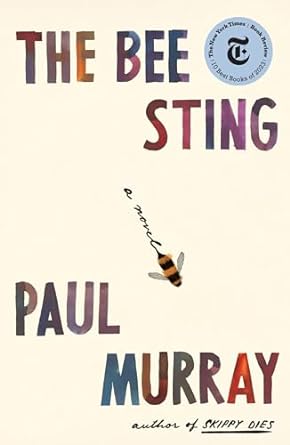
Paul Murray’s The Bee Sting is the most compelling work of fiction I’ve read in years. It’s a tale about a contemporary Irish family, told through each of its four members’ perspectives—father, mother, daughter and son. Murray’s use of first-person narrative, sentence structure and punctuation (or lack thereof) ensures each voice is distinctive. 

Though the story unfolds over more than 600 pages, for the reader, there’s never a sense that even a paragraph is ancillary or unnecessary. It’s a story that conveys raw human emotions: grief, fear, disappointment, yearning, joy, duty and desire.

Murray cleverly, almost stealthily, explores some grand themes, such as one’s desire to be purely authentic, while the forces of life and societal conventions push back. He expertly captures how the past imprints on a person. Hardship, envy, violence, poverty, happiness, fleeting moments of awe, passion—memories that bind to us like DNA strands. 

The author keenly explores the friction of a life that doesn’t follow the path you’ve plotted. Does it ever?

If you’re looking for a book that sucks you in and holds you captive until the final sentencee, this is that book. 

Book Publishing, Music, TV, Radio, Audio

Rebel Girl

I preordered Rebel Girl: My Life as a Feminist Punk by Kathleen Hanna. I felt it mandatory reading. I’d listened to the band(s) back in the day. I was fascinated by the lore and that Kathleen married my second favorite Beastie Boy. I wanted the backstory on it all, especially what it was like to be a woman in a band in the midst of a nearly all-male punk moment. I certainly knew what it was like to be a woman in the clubs, basements and warehouse shows where women were relegated to the perimeters by virtue of slamming male bodies and fear of being trampled or groped. 

What I didn’t know to expect was the constant struggle, the poverty, the family dysfunction, the sexual abuse, the rapes, the violence, the loneliness, despair, the anger and hatred (especially from other women), which Hanna reveals in bite-sized chapter chunks. Sometimes it’s all you can swallow before snapping the cover shut and trying to process it, wondering how the author ever did. 

Did she? 

Can you? 

It’s a question I ask myself all the time. Do we actually heal? Or do we just learn to be temporarily okay in the moment and then string those moments together to make a day, a week, a year, a decade, a lifetime? 

Hanna’s storytelling kept me captivated. I read the book in two days. After all, it’s what a memoir should be — raw, candid, honest and deeply introspective. 

Book Publishing, News & Publishing, Politics & Public Policy, Printing and Imaging

Can we be a democratic society without libraries and free access to information?

When I was growing up, libraries seemed this quiet, unassuming certainty in everyday life. They were well-funded, accessible to everyone in the community, no matter why nor when you needed them. I saw librarians as all-knowing beings, who could find even the most obscure title on the stacks, without so much as a glance at a card catalog. 

I worked for a while at my university library, in the periodical section. When students came in looking for references, I’d pull out newspapers and magazines from the bowels of the back or help them learn to use the microfiche machines — high-tech back then. 

It may have been my paternal grandmother and her mother (Ida Locke, a librarian seen here) who encouraged my early reading. 

Great-grandmother Locke lived with my grandparents, and I have fond memories of her seated on their sofa, a stack of books always present on the end table beside her. An insatiable reader, she could sail through a book in a single afternoon. She was a quiet, tiny mouse of a woman, always dressed for going out, even when there was no place to go. I can’t remember her voice, because she rarely offered even a hint of a smile nor a string of spoken words. But when I’d visit, she’d pat the sofa next to her, inviting me to sit and tell her what I was reading that week. Born to a German community in rural West Virginia, books were her way to rise above, to escape, to aspire — to work and have autonomy as a woman of that era. 

Books didn’t change her nature — who she was or how she conducted her simple, frugal life — but they did broaden her perspective and informed her understanding of the world outside of her own.

I think about her a lot lately, as libraries are under attack from so many directions. Funding is imperiled. Politics has landed on their doorsteps. Shamefully, surreally, book bans — patently anti-liberty and anti-intellectual — are part of our national discourse. Librarians themselves are harassed and forced out of their jobs by politically motivated and dark money-funded mobs. Can democracy survive under these circumstances, I wonder? It feels symbolic of how we’ve lost our way. 

Book Publishing, News & Publishing, Politics & Public Policy

About “Going There”

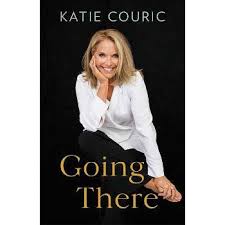
Katie Couric’s 2021 memoir is perfectly titled: Going There

It’s clever, because it relates to so many facets of her story—the places she went (physically and emotionally) over the course of her decades-long career in news; the torment of recalling profound loss and grief; or how she took a chance at love again. 

Whether you’ve been a fan or a casual observer, Couric’s familiar voice comes through in the text. 

Full disclosure, I once felt full-on fangirl when Couric retweeted me during the pandemic—both of us grateful for journalists who were covering “the front lines” of COVID.  

As far as women in news go, Couric is legendary. And her memoir could’ve easily gone down a chest-thumping path, boasting of her myriad hard-news features and epic longevity on TV screens. Instead, there’s a raw, earnest quality to her retelling of the story that’s genuine and approachable, like Couric herself, as we come to see.

She shares with us what it was like to grieve her husband, her sister, her parents. She speaks honestly about loss, motherhood, exhaustion, but also about love, redemption and gratitude. 

I’ve always felt the most effective memoirs are those that demonstrate a change and a maturation of the autobiographer: what you learn, who you come, what you overcome. 

Life isn’t Instagram. 

Going There is deeply introspective, particularly when Couric recounts her regrets and miscalculations along the way—missing signs that her beloved first-husband Jay was ill; unwisely choosing partners after his death; anecdotally putting career ahead of family; and a slew of professional missteps that make her (and us) cringe today. 

Most of all, it’s a tome about journalism and TV news, from a woman’s point of view during a transformative time, spanning the age of overt misogyny and sexual misconduct to the post-#MeToo modern day. 

Couric peels back the curtain on what it was like to navigate network politics, sexism and fierce competition, not just between the TV networks, but sometimes among your own network team. I’ll think about “60 Minutes”—a staple Sunday-night show in our home growing up—a little differently after learning how Couric was treated by the producers and fellow journalists. 

Recently, in conversation with someone else in news, I used the term “working sources,” and I was met with silence on the other end of the line; then, a question: What do you mean by ‘working sources?’ More condemnation than question. And I explained what I feel it’s like to land an important interview, particularly with someone who may be initially reluctant to go on record, let alone on camera. I spoke of building trust, of having conversations, perhaps meeting in person, explaining my process, being fully transparent and honest—but, in effect, working to get the interview.

Couric gives us a no-holds-barred account of “working sources,” crediting her bookers and producers for contortionist-like moves to woo them. In the print world that I know, there are clearly defined ethics on such matters, and one of them is that we don’t accept gifts from them, and they shouldn’t expect from us in return. It seems TV news is a bit more cut-throat competitive, and that there are gray areas on such matters. 

I (and I’m sure a lot of women readers) also appreciated how Couric spoke about trying to balance the two sides of her professional personality—serious, right-toned journalist versus the quirkier, fun, silly, sometimes smart-ass side of her personality. The TODAY Show gave her the perfect platform for that balancing act. 

“Katherine or Katie, the serious journalist or the smiley cutup … the tension between those two sides of my nature would run like a fault line through my career,” she reflects.

Couric writes about Jeff Zucker and Matt Lauer, men with whom she’d had as close a professional relationship as you might have; both proved grave disappointments in the end.  

Couric took a lot of heat when Going There first came out, particularly about her recounting of an interview with SCOTUS Justice Ruth Bader Ginsburg. Couric asked Justice Ginsburg about Colin Kaepernick’s protests. The Justice expressed how she found it disgraceful—not what you might expect from a liberal-leaning, First Amendment-affirming judge. Couric revealed how she wrestled with the editorial decision about whether to keep the exchange in the interview, or to cut it out. Critics decried that it was Couric’s duty to broadcast her remarks, that it was journalistic malpractice not to. She’s not objective, they said, citing Couric’s admission that she greatly admired Ginsburg. 

But that’s journalism. You bring personal perspective to your reporting. How can you not? You are a person, a citizen, with lived experiences like anyone else. You learn things, and those things inform you as you move through life and, professionally, into others’ lives. These editorial dilemmas come up in nearly every interview or reporting assignment, especially in hard news and investigative journalism. 

“I know I’m being fair when everybody’s mad at me,” Walter Kronkite once told Couric. 

If all this sounds intriguing, I hope you’ll read the book, and check out Couric’s Instagram for more of her “smiley cutup” side.

Book Publishing, Music

Even rock stars mature

A couple of weeks ago, I threw out my back while leaning over in the shower, merely shaving my legs, though no one nor the light of day cares if I did. This is what it means to be 50-something.

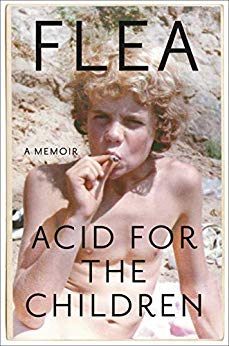
In time, I’ve rehabbed my way back to a comfortable seated position after weeks standing or walking – the only way to manage the pain. I looked at my sleepless nights as time to read some books I’d had on my desk for a while, including Flea’s memoir, Acid for the Children (2019, Grand Central Publishing).

You may know Flea by his parasitic stage name and for his bass-thumping beats behind Red Hot Chili Peppers’ catalog of work. He’s a founding member of the band. Unexpectedly, Flea – born Michael Balzary – ends his memoir just as the band begins its trajectory toward decades-long fame and international popularity. He begins it where he started – suburban Australia, his birthplace – and leads the reader on a wild journey from Australia to Rye, New York, and settles in the hedonism of late-’70s/early-’80s Los Angeles. 

We ride along as his family splinters, through his parents’ divorce, and as his Dad retreats to Australia. He speaks of a childhood spent in search of a father figure, and how his mother hitched herself to a struggling substance-abusing musician – who, despite having some redeeming qualities (like introducing young Flea to jazz) was never a stable substitute.  

His childhood story is partly about discovery – discovering rhythm, musical genres and musical instruments, new bands, and the chicks who swooned for them. We see Flea’s musical tastes evolve, expand, become refined. He opines on the virtues of complex jazz. He confesses to being a late-comer to rock and an unapologetic Led Zeppelin fanboy. For the rest of us who weren’t part of the L.A. music scene, he makes us feel like we were there, alongside him, in the pit, experiencing bands like X, Circle Jerks, Dead Kennedys, and FEAR – a local band that made him anecdotally famous before RHCP hit the big time. He recalls his first listen to Sugarhill-produced hip-hop and what it felt like in his very core the first time he heard Public Enemy’s bass drop. 

In a way, the memoir is also a tale of untraditional family and forgiveness. Flea narrates his story by linking together formative years and influential characters he encountered along the way. He speaks of lifesaving friendships with passion, reverence, gratitude, and awe. He learned to seek out relationships that transcend superficiality, that have their own rhythm and palpable energy, like what he’s had with RHCP front man, Anthony Kiedis. 

Contrition is a running theme throughout the book, and Flea – the middle-aging man today – has clarity about his shortcomings, mistakes, and unbridled recklessness of his youth. His wild-child antics read more like street-kid felonies. 

And, of course, there were the drugs. Copious amounts, readily available, a smorgasbord of drugs, alluring, emotion-tamping, mind altering, psychotic-episode inducing drugs – many of them injected into his veins with shared needles. 

By the time Flea sat down to pen Acid for the Children, he was 27 years sober. 

Like with any rock star or musical icon, fans likely think they know Flea by the music he makes and his on-stage funkified persona, but he peels layer upon raw layer back for the reader to see here. In defiance of his good fortune, his has been a hard life, a hard-lived life. It could’ve, should have, hardened him. But that is not how the story ends.

Book Publishing, News & Publishing, Politics & Public Policy, Printing and Imaging, Uncategorized

Everything I Know About Capitalism, I Learned In the 6th Grade

This headline is not true, and yet, it was in this pre-Middle School era of my life when I first began to fully “understand the value of a dollar.”

I find that’s a popular phrase passed down through generations, an invaluable life lesson or a rite of passage. For two sixth-grade classes in the 1970s, their introduction to commerce and capitalism began that week.

That was the year that the number of students had outgrown the school, and some lucky contractor got the local school system bid for providing pop-up classrooms made out of stitched-together double-wide trailers. Two sixth-grade classes shared the one we’d been sentenced to, with a sliding partition between the two groups, each with its own teacher.

The partition was an insufficient barrier that mostly rendered us distracted by what was happening with the kids on the other side. When they laughed, our heads swiveled. When we acted up, they’d go silent and giggle as they listened to our punishment being levied. One teacher would have to raise her voice to keep the attention of her class whenever the sounds of the other teacher seemed more interesting.

And vice versa, and so it went.

Imagine the delight in our little hearts when one day the partition was folded in on itself, the two classrooms of kids facing off at last. The once competitive teachers joined forces and announced that we were going to learn about “the value of money.” They went on to explain that for a period of one week, there would be no traditional classroom lessons and that our trailer would be transformed into a microcosmic town.

Each of us had a role to play in the town. They asked for a show of hands when assigning roles like bankers, retailers, landlords, food purveyors, even insurance carriers.

I was the only one who wanted to run the town’s newspaper.

The town also needed governance and law, and so a show of hands indicated which of my classmates aspired to political life – managing their day-to-day duties while also running for a handful of offices, including mayor and sheriff.

We spent a day or two planning and building the town. Creative cardboard cutouts became our storefronts. Logos were designed, and signs went up over our storefronts. My classmates got right to work. The banker “handprinted” money and distributed a precisely equal amount of cash to each of the town’s residents, so everyone had a level playing field – a comparatively endearing socialist start to what would end in survival-of-the-fittest capitalistic carnage.

The most popular business, by far, was the town baker, who sold decadent treats to a classroom of kids given the freedom to make their own nutritional and expenditure decisions.

We didn’t speak of food allergies back then.

I got right to work wearing all the hats at the newspaper – a lot like things are today.

I reported and designed the layout. I “printed” the paper on the front office’s mimeograph. Printing is a big cost for actual newspapers, but I’d managed to get the paper and “press” for free. This would be seen as an ethical breach for actual newspapers.

I had to hock the paper, selling single copies to passersby. I sold advertising and wrote ad copy. I had to distribute the paper when it was hot off the press.

And though everyone wanted to read the paper – mostly to see if they were in it – few wanted to buy the paper. It was hard to compete with Mom-baked brownies.

I spent the week walking around the perimeter of the trailer, interviewing my classmates about the health of their businesses or who they liked in the pending election. I wrote trends pieces about how the town’s residents thought the rent was too damned high and how they wanted to be able to spend more of their money on luxury items, like those chocolately brownies. I vaguely remember writing an expose on the insurance carrier in town, who I saw as a huckster selling vapor.

“People give you money, but what do they really get in return,” I grilled him like I was Woodward or Bernstein.

One by one, the small businesses fell, exiling their owners from town, to a corner of the trailer-classroom to watch an episode of “Free to be You and Me” or to throw a sixth-grade temper tantrum, perhaps.

Naturally, the bank endured; it thrived off of the interest. The insurance carrier – who had minimal overhead costs and a contained, safe environment that put odds in his favor – stayed afloat. The baker had fistfuls of colorful cash by week’s end. And the newspaper endured, though I, too, was pretty busted. By the time I’d covered my own costs – rent, insurance, crayons – I didn’t have enough currency for much else.

I’d spent days coveting my classmates’ disposable income and how they frivolously, happily spent it on baked goods and insurance policies.

Somehow, I’d managed to get the news out, but it wasn’t easy, and it wasn’t lucrative.

Book Publishing, News & Publishing, Politics & Public Policy, Uncategorized

Mary L. Trump’s Book: A Review

I bought Mary L. Trump, PhD’s book, “Too Much and Never Enough” not so much because I was interested in the family dynamics of the Trump clan, but because I have an (confessed) staunch disdain for men who try to silence women, and for Presidents who make people around them sign NDAs and file frivolous lawsuits to delay and degrade every publication or opinion about him. So, when I heard that the Trump family had tied the book up in court, I pre-ordered it.

It’s a thin hardback and an easy read.

In the early chapters, she struggles with voice.

At times, Trump reminds the reader that she is a clinician, highly educated in and informed about mental health and mental disease. Occasionally, she breaks from that serious tone, injecting editorial that is biting or snarky. I’m not sure those work in her favor.

A few chapters in, she hits her stride, and the book transitions into what it wanted to be from the beginning: A highly personal memoir, with decades worth of cringe-inducing memories of sadism and cruelty that runs like sap in the Trump family tree. Knowing that, you might tend to believe that this is purely “a hit piece,” written for retribution or revenge. She is wounded – and who wouldn’t be – but it becomes evident that malice isn’t her motivation. Rather, the narrative seems to indicate a patently private person’s strange sense of duty to the public, to correct the record on her family’s biography and image, including the curated and fabricated story of her Uncle’s business acumen.

The stories of family “black sheeps,” of dramatic dis-ownings, or siblings who turn against one another for their parents’ affection or post-mortem spoils, are nothing new. But the story of the Trump family is particularly tragic, because the repercussions of their greed, cruelty, and tumult have trickled down to all of us now. They’re global.

The saddest part of this story, it seems to me, is the acknowledgement that family can be so easily fractured, and that sometimes a person can spend a lifetime thinking they play a certain role in the family – thinking they are (if not well liked, then) well-loved by other members of the family. They can carry on blindly under those assumptions for years, decades even, until one day they come to realize that they didn’t have that firm standing at all, that the affection they felt for others was not reciprocated – the unsteadying realization that “I am on my own.”

I think that must’ve been how it felt in the moment Mary Trump recounts near the end of the book – a fateful phone conversation with her grandmother, the President’s mother. It’s a gut punch.

By the end, I was surprised at how viciously the President’s immediate family and inner circle denounced his niece’s recounting of her life to date. Donald, his siblings, their children? They were raised in a culture of abuse. You’ll close this book and think, “That explains so much.” It almost makes a person feel pity for the President, for the man he came to be. Almost.