book, Book Publishing, fiction, News & Publishing, Non-fiction, Politics & Public Policy, writing

Find your joy at the library.


There are a few things in life that bring me joy, and one of them is my weekly trip to the library. Stepping inside feels like entering a portal of possibility.

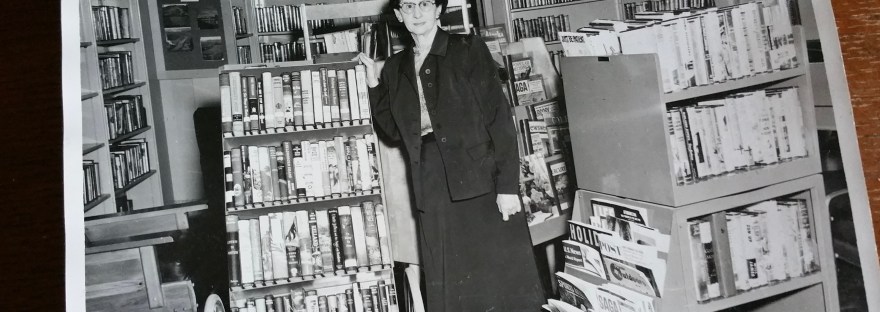
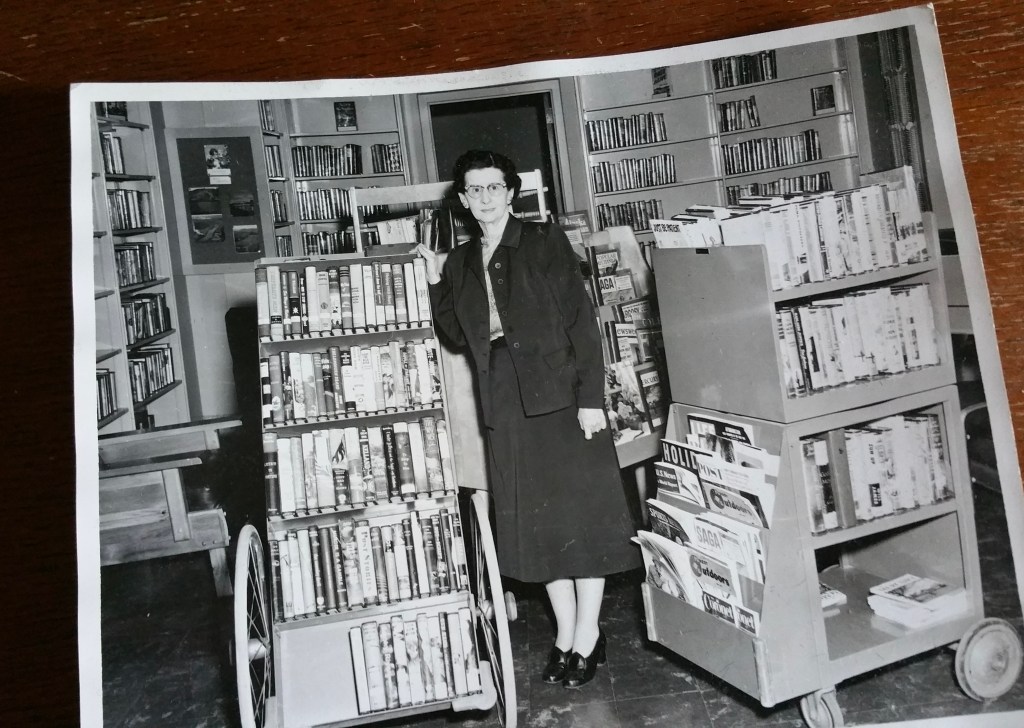
I’ve written a lot about libraries as a local community amenity and myriad ways our libraries support our communities beyond providing free access to books and periodicals. There’s also the individual, personal connection many of us have to libraries, including fond memories from childhood. Some of my earliest memories are accompanying my grandmother and great-grandmother to the library, where we’d all load up with a stack of books to devour in a weekend. (Pictured: My great-grandmother volunteers at the library.)


Now, from the vantage point of my work at Editor & Publisher, I see the shared missions of libraries and local news media: to inform and build communities, expand access to knowledge and defend the First Amendment. In honor of National Library Week, I spoke with the American Library Association’s president, Sam Helmick, about the week of celebration—with the theme “Find Your Joy”—and its critical call to action. Click the link to read, and please share your thoughts on your local library in the comments.
https://www.editorandpublisher.com/stories/find-your-joy-at-the-library-ala-urges-communities-and-news-media-to-stand-against-book-bans,260821


Book Publishing, News & Publishing, Politics & Public Policy, Printing and Imaging

Can we be a democratic society without libraries and free access to information?

When I was growing up, libraries seemed this quiet, unassuming certainty in everyday life. They were well-funded, accessible to everyone in the community, no matter why nor when you needed them. I saw librarians as all-knowing beings, who could find even the most obscure title on the stacks, without so much as a glance at a card catalog. 

I worked for a while at my university library, in the periodical section. When students came in looking for references, I’d pull out newspapers and magazines from the bowels of the back or help them learn to use the microfiche machines — high-tech back then. 

It may have been my paternal grandmother and her mother (Ida Locke, a librarian seen here) who encouraged my early reading. 

Great-grandmother Locke lived with my grandparents, and I have fond memories of her seated on their sofa, a stack of books always present on the end table beside her. An insatiable reader, she could sail through a book in a single afternoon. She was a quiet, tiny mouse of a woman, always dressed for going out, even when there was no place to go. I can’t remember her voice, because she rarely offered even a hint of a smile nor a string of spoken words. But when I’d visit, she’d pat the sofa next to her, inviting me to sit and tell her what I was reading that week. Born to a German community in rural West Virginia, books were her way to rise above, to escape, to aspire — to work and have autonomy as a woman of that era. 

Books didn’t change her nature — who she was or how she conducted her simple, frugal life — but they did broaden her perspective and informed her understanding of the world outside of her own.

I think about her a lot lately, as libraries are under attack from so many directions. Funding is imperiled. Politics has landed on their doorsteps. Shamefully, surreally, book bans — patently anti-liberty and anti-intellectual — are part of our national discourse. Librarians themselves are harassed and forced out of their jobs by politically motivated and dark money-funded mobs. Can democracy survive under these circumstances, I wonder? It feels symbolic of how we’ve lost our way.