Among our news community, we frequently talk about “trust in news” and how it has eroded to dangerous levels. I’d suggest there are myriad reasons for that, including some that date back centuries. The press has always been a convenient punching bag. When people don’t like what they read, they naturally want to discount the information.
Some of the phenomenon is patently new, as we’ve seen with the increase in “lawfare” suits designed to chill journalists and shutter news organizations outright. There’s also the toxic political rhetoric, even shouted from the highest offices in the land, expressly to make people doubt watchdog and accountability reporting.
Now, we’re contending with Artificial Intelligence (AI), too, which is training people to doubt what they read and view.
Some of it is well-deserved. The press doesn’t always get the story right, especially in the rush to report first. Quality journalists among the American media are contrite when it happens, acknowledging their mistakes and offering corrections or retractions. Far too many outlets masquerading as trusted sources of news peddle misinformation and never acknowledge their failures to report accurately. That’s harmful, industry-wide.
I’d suggest the public also has a cynical view of how news is gathered and produced when they hear about strategic misdeeds, such as tabloid-style “catch and kill” stories — for example, when an adult film actress’ story about an affair with a politician never sees the light of day because the publisher and the porn star are paid to suppress it. It’s easy for the public to conflate that kind of “news” with what earnest, professional journalists produce day-in, day-out.
Indeed, there are many reasons — deserved and not — for the lack of trust in news today, but the important thing is that we’re thinking about it as an existential threat and doing our best to counter it. That’s why I’m bullish on The New York Times decision to convene a “trust team” that’s keenly focused on this issue.
At the link, read about my conversation with Edmund Lee, editor of The Times’ trust team and one of the ways they’ve built more transparency and familiarity into the display of news.
Ever wonder what it takes to produce Pulitzer Prize-winning journalism? I spoke with reporters and editors at three newsrooms that were awarded Pulitzers earlier this month. They spoke about the inspiration behind their award-winning series; the labors and resources the projects required; the dilemmas they faced during the news gathering; and ultimately, the impact.
Artificial Intelligence (AI) shows a lot of productivity promise for news publishers, but in its early iterations, AI is also proving to be perilous. E&P has been covering AI developments frequently, and this month we look at how Generative AI is changing the way people search for and retrieve information from AI-enabled search engines.
For the user, a query to an AI-enabled search engine may provide a thorough responses that satisfies their question. The risk remains that those response summaries may be flawed with fallacies, depending on how the AI engine was trained.
The other concern for news publishers is how users behave based on the search response. They may be satisfied with the result and sated, and resist scrolling down for additional search results and links to other sources, including news articles. That should trouble any news media business that relies on a healthy influx of web traffic and has for years invested in improving SEO performance.
We invited no less than 30 publishers about how they’re preparing for AI-search disruption. Some spoke on background; others opted not to comment at all, citing an uncertainty about what to do. There’s no shame in that. AI is new and developing at lightning speed, and we’re all just trying to figure out where this path is leading. But a few publishers are ahead of the curve and implementing new ways to nurture more direct relationships with readers/viewers/listeners, thereby relying less on search traffic. We tell two of their stories at the link:
As with many other states today, Vermont is contending with a new cannabis economy. It has opened up a wellspring of opportunity for new businesses (dispensaries, growers and other cannabis-focused commercial organizations), associations, and for the state government to allocate and invest new tax revenue.
Building on a legacy news brand that dates back a century, Vermont News & Media saw its own opportunity to create a cannabis title, “Green Mountain Vermont Cannabis News,” to inform the public about cannabis laws and regulations, new businesses and jobs, and how to enjoy wider access to locally grown products. They’ve taken a different approach to the publication than other cannabis titles, choosing to reflect the state’s craft-cannabis culture.
Social media can be a minefield for journalists to navigate today. Social platforms are a great tool for extending the reach and impact of reporting, and it’s also part of our everyday non-professional lives, as well. It’s a way to communicate with friends and family, a way to make connections, network, socialize, have a say in our communities, and even find love.
But being active participants in the social scene comes with obstacles. Social opens journalists up to public scrutiny in a way that bylines alone never did. It can paint us as targets for bad actors, and set us up for condemnation over our judgments about what we share professionally and personally.
Think about the common practice of “liking” someone else’s post. As a person in news, there may be many reasons to do that. I’ve used a “like” to bookmark a post I want to expediently revisit. I’ve hit the thumbs up to boost the journalism itself because I feel the reporting is important and am glad the outlet invested in it. These aren’t necessarily endorsements or affirmations of the “message” of the post, but from time to time, I’ll like a post because I do “approve of this message.” So, there are nuances here, yet even a simple “like” can get a journalist in hot water today, as we saw just recently occur at the BBC.
At E&P, we wanted to take a closer look at how news media publishers are addressing dilemmas about professional conduct on social platforms. We found many don’t have formal policies in place beyond their long-standing ethics rules, but quite a few are considering how to formalize a policy, so there are no gray areas when issues arise. I was heartened to speak with a number of editors who trust their reporters to act responsibly in social scenarios and, in fact, give them a great deal of leeway to still participate in social circles without fear of oppressive oversight and penalty.
At the link, check out my conversations with a few of those thoughtful editors:
In an era plagued by media consolidation, hedge fund ownership and gutted newsrooms — or “ghost papers” — investigative journalism has fallen by the wayside at too many newsrooms across the country. Investigative journalism is labor- and time-intensive and often expensive to produce. It also requires skilled journalists to do the work.
What does it take to create and lead an investigative team today? E&P asked five investigative editors. Read on at the link.
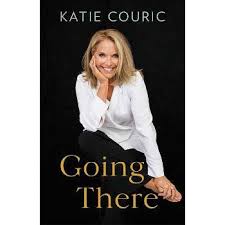
Katie Couric’s 2021 memoir is perfectly titled: Going There
It’s clever, because it relates to so many facets of her story—the places she went (physically and emotionally) over the course of her decades-long career in news; the torment of recalling profound loss and grief; or how she took a chance at love again.
Whether you’ve been a fan or a casual observer, Couric’s familiar voice comes through in the text.
Full disclosure, I once felt full-on fangirl when Couric retweeted me during the pandemic—both of us grateful for journalists who were covering “the front lines” of COVID.
As far as women in news go, Couric is legendary. And her memoir could’ve easily gone down a chest-thumping path, boasting of her myriad hard-news features and epic longevity on TV screens. Instead, there’s a raw, earnest quality to her retelling of the story that’s genuine and approachable, like Couric herself, as we come to see.
She shares with us what it was like to grieve her husband, her sister, her parents. She speaks honestly about loss, motherhood, exhaustion, but also about love, redemption and gratitude.
I’ve always felt the most effective memoirs are those that demonstrate a change and a maturation of the autobiographer: what you learn, who you come, what you overcome.
Life isn’t Instagram.
Going There is deeply introspective, particularly when Couric recounts her regrets and miscalculations along the way—missing signs that her beloved first-husband Jay was ill; unwisely choosing partners after his death; anecdotally putting career ahead of family; and a slew of professional missteps that make her (and us) cringe today.
Most of all, it’s a tome about journalism and TV news, from a woman’s point of view during a transformative time, spanning the age of overt misogyny and sexual misconduct to the post-#MeToo modern day.
Couric peels back the curtain on what it was like to navigate network politics, sexism and fierce competition, not just between the TV networks, but sometimes among your own network team. I’ll think about “60 Minutes”—a staple Sunday-night show in our home growing up—a little differently after learning how Couric was treated by the producers and fellow journalists.
Recently, in conversation with someone else in news, I used the term “working sources,” and I was met with silence on the other end of the line; then, a question: What do you mean by ‘working sources?’ More condemnation than question. And I explained what I feel it’s like to land an important interview, particularly with someone who may be initially reluctant to go on record, let alone on camera. I spoke of building trust, of having conversations, perhaps meeting in person, explaining my process, being fully transparent and honest—but, in effect, working to get the interview.
Couric gives us a no-holds-barred account of “working sources,” crediting her bookers and producers for contortionist-like moves to woo them. In the print world that I know, there are clearly defined ethics on such matters, and one of them is that we don’t accept gifts from them, and they shouldn’t expect from us in return. It seems TV news is a bit more cut-throat competitive, and that there are gray areas on such matters.
I (and I’m sure a lot of women readers) also appreciated how Couric spoke about trying to balance the two sides of her professional personality—serious, right-toned journalist versus the quirkier, fun, silly, sometimes smart-ass side of her personality. The TODAY Show gave her the perfect platform for that balancing act.
“Katherine or Katie, the serious journalist or the smiley cutup … the tension between those two sides of my nature would run like a fault line through my career,” she reflects.
Couric writes about Jeff Zucker and Matt Lauer, men with whom she’d had as close a professional relationship as you might have; both proved grave disappointments in the end.
Couric took a lot of heat when Going There first came out, particularly about her recounting of an interview with SCOTUS Justice Ruth Bader Ginsburg. Couric asked Justice Ginsburg about Colin Kaepernick’s protests. The Justice expressed how she found it disgraceful—not what you might expect from a liberal-leaning, First Amendment-affirming judge. Couric revealed how she wrestled with the editorial decision about whether to keep the exchange in the interview, or to cut it out. Critics decried that it was Couric’s duty to broadcast her remarks, that it was journalistic malpractice not to. She’s not objective, they said, citing Couric’s admission that she greatly admired Ginsburg.
But that’s journalism. You bring personal perspective to your reporting. How can you not? You are a person, a citizen, with lived experiences like anyone else. You learn things, and those things inform you as you move through life and, professionally, into others’ lives. These editorial dilemmas come up in nearly every interview or reporting assignment, especially in hard news and investigative journalism.
“I know I’m being fair when everybody’s mad at me,” Walter Kronkite once told Couric.
If all this sounds intriguing, I hope you’ll read the book, and check out Couric’s Instagram for more of her “smiley cutup” side.
For E&P’s March issue, I had the pleasure of speaking with Lisa Snowden The Baltimore Beat’s editor. Last summer, Baltimore Beat returned to the local news scene after a publishing pause. They had a somewhat quiet relaunch in late summer, when other Baltimore news outlets were basking in national attention over Baltimore’s new “newspaper wars”—pitting the new Baltimore Banner against the city’s legacy paper, the Baltimore Sun.
Snowden didn’t have much time to pay attention to that media frenzy. The veteran Baltimore journalist was busy relaunching the Beat as a nonprofit local news title for Baltimore’s Black community—61.6% of the city’s population, per the U.S. Census. It is intentionally a print title (w/ a companion site) that’s strategically distributed around the city, and it’s free.
The Baltimore Beat’s revenue model relies on philanthropy and the sustained support of the community. Snowden plans to earn that support by being a practical, accessible, go-to resource for the public.
Editor & Publisher (E&P) Magazine closes out the year with a cover story dedicated to all the journalists and editors keeping us informed during the year-end holidays. It’s a bittersweet story, as you will see, not unlike a holiday spent apart from loved ones, or the end of another year, now past. I wanted to especially thank Rob Tornoe for illustrating the cover. He so perfectly captured the moments when the newsroom is otherwise quiet, when the world around celebrates, but there’s a lead to chase, a story to tell and the public to serve.






 Gretchen A. Peck