book, Book Publishing, fiction, Food, Travel, Culture

Read this book.

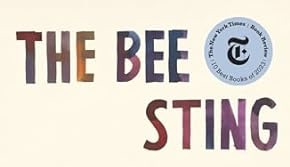
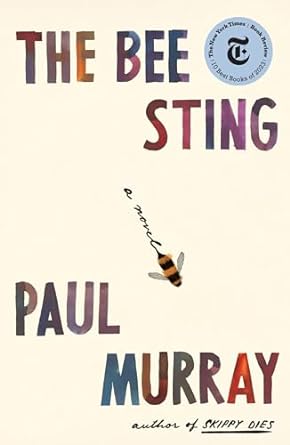
Paul Murray’s The Bee Sting is the most compelling work of fiction I’ve read in years. It’s a tale about a contemporary Irish family, told through each of its four members’ perspectives—father, mother, daughter and son. Murray’s use of first-person narrative, sentence structure and punctuation (or lack thereof) ensures each voice is distinctive. 

Though the story unfolds over more than 600 pages, for the reader, there’s never a sense that even a paragraph is ancillary or unnecessary. It’s a story that conveys raw human emotions: grief, fear, disappointment, yearning, joy, duty and desire.

Murray cleverly, almost stealthily, explores some grand themes, such as one’s desire to be purely authentic, while the forces of life and societal conventions push back. He expertly captures how the past imprints on a person. Hardship, envy, violence, poverty, happiness, fleeting moments of awe, passion—memories that bind to us like DNA strands. 

The author keenly explores the friction of a life that doesn’t follow the path you’ve plotted. Does it ever?

If you’re looking for a book that sucks you in and holds you captive until the final sentencee, this is that book. 

News & Publishing, Politics & Public Policy

Two of ProPublica’s Editors Talk About the Past, Present and Future for the Nonprofit News Leader

It’s hard for me to believe that nearly 20 years have passed since ProPublica first came on the news media scene. I immediately followed their work, because I believed in their mission and the void they were filling. Yet, I worried that the then-fledgling news outlet and the nonprofit model wouldn’t pan out. 

Thankfully, they flourished. 

We wanted to write about ProPublica now, in a year when its journalists earned a 7th Pulitzer Prize (added to a considerably long list of other awards) and has become an unquestionable leader in the industry — not just for the impactful journalism their newsroom produces, but for the way in which they’re enabling other newsrooms around the country to excel in their own accountability work through partnerships. 

I spoke with two of the editors who’ve been there since the beginning — about what it was like to stake their careers on the new nonprofit; how the newsroom has evolved; and what keeps them motivated all these years in. At the link, hear from Charles Ornstein, ProPublica’s managing editor, local, and Editor-in-Chief Stephen Engelberg. 

https://www.editorandpublisher.com/stories/ethical-exposs-and-pulitzer-prizes-propublicas-impactful-journey-in-investigative-journalism,250361

News & Publishing, TV, Radio, Audio

TV and Radio Broadcasters Launch Hyperlocal Digital and Streaming News Services

I’ve long appreciated the concept of hyperlocal news. What better way to make communities and neighborhoods feel seen and heard than to cover the news expressly for them and about them? We’ve seen news outlets like Block Club Chicago and Trib Total Media have rousing success taking a street-level neighborhood approach to news. 

I was pleasantly surprised when E&P’s Robin Blinder and Mike Blinder returned from Borrell Miami this spring with a new story in hand about hyperlocal news—TV and radio broadcasters leveraging their brands and trustful audiences to launch hyperlocal digital sites and streaming services. So, I followed up with Gordon Borrell to get his take on why hyperlocal news was seeing a renaissance of sorts and followed up with three media executives in the throes of starting up new hyperlocal media properties. Here are their stories: 

#communitynews #hyperlocalnews #TV #Radio #Streaming #digitalmedia

https://www.editorandpublisher.com/stories/from-news-deserts-to-digital-havens-the-rise-of-hyperlocal-journalism,250359

Food, Travel, Culture, photography, Uncategorized

On the Block: A Photographic Tour of Block Island

All photos ©G.A. Peck

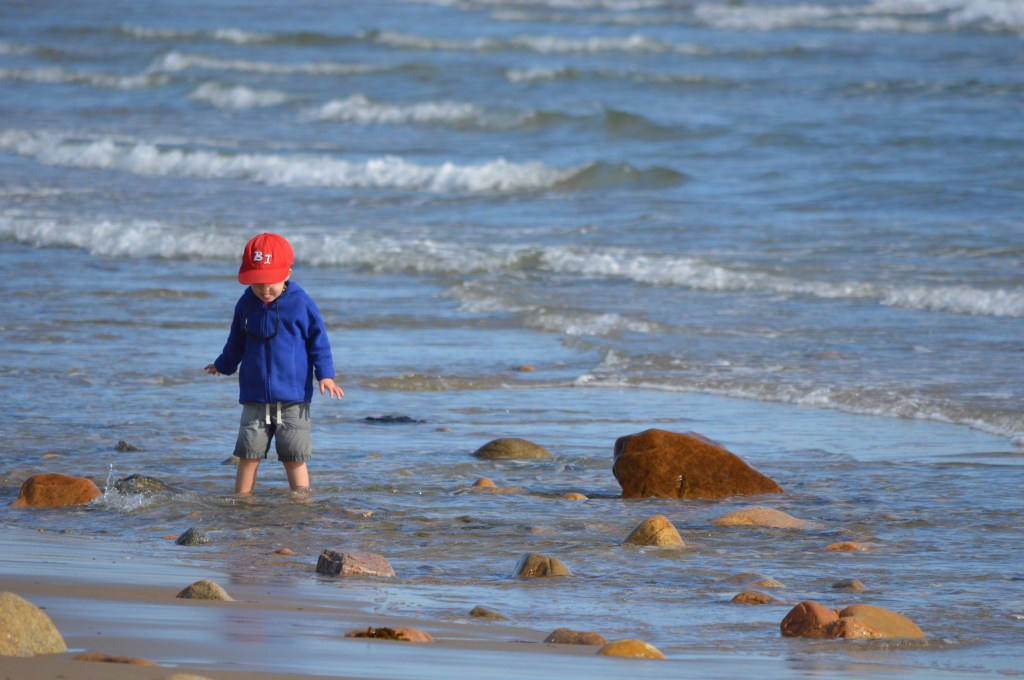
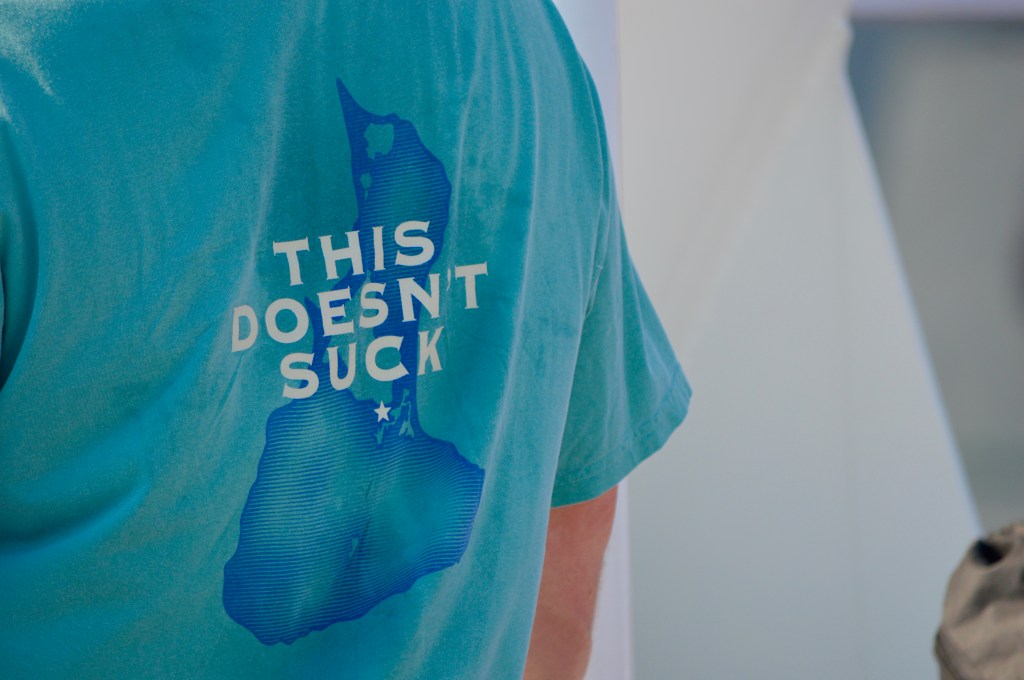
Block Island is just off the coast of Rhode Island, accessible by ferries that leave from New London, Connecticut and Point Judith, Rhode Island. 

The island only has approximately 1,400 residents, but it’s a popular day-trip, weekend or vacation destination for visitors. 

The island has both sandy and pebble beaches, accessible and free. 

Beginner surfers catch waves on the main public beach. 

There are two lighthouses — one you can tour and another that’s popular with photographers.

The island can be quite crowded during the summer season. But it’s also a wonderfully romantic destination for off-season visitors. One of my favorite trips to the island was New Year’s Eve one year. There were only a handful of tourists. Locals all descended on a local bar, Yellow Kittens, to ring in the New Year, and the next morning, they all gathered on the beach for an annual Polar Bear Plunge and bonfire. 

Block Island homes derive nearly 100% of their energy from offshore wind. There are five windmills off its coast, which have become another popular tourist attraction. Chartered boats take you up close and personal with the wind turbines. It’s a great way to get a feel for their massive scale. 

The ferries are the most popular way to get to the island, but if you’d like a special voyage, take a small-craft plane out of Westerly, Rhode Island’s airport. It’s a 12-minute flight on a plane that holds about eight passengers and their luggage. 

The plane is no frills. There are no drink carts, no extra leg-room seats, and no air conditioning. On this flight, during a particularly hot day, our pilot asked, “Would you like me to turn on the air conditioning?” The passengers all chimed in together with a resounding, “Yes.” Little did we know that the “AC” meant she put her cockpit window down and used the palm of her hand to direct a breeze back into the cabin. 

Can confirm. 

News & Publishing, Politics & Public Policy, Printing and Imaging

Talking newspapers with Kelsey Russell

This ranks as one of the most fun and fascinating conversations I’ve had this year about the power of the printed newspaper and media literacy.

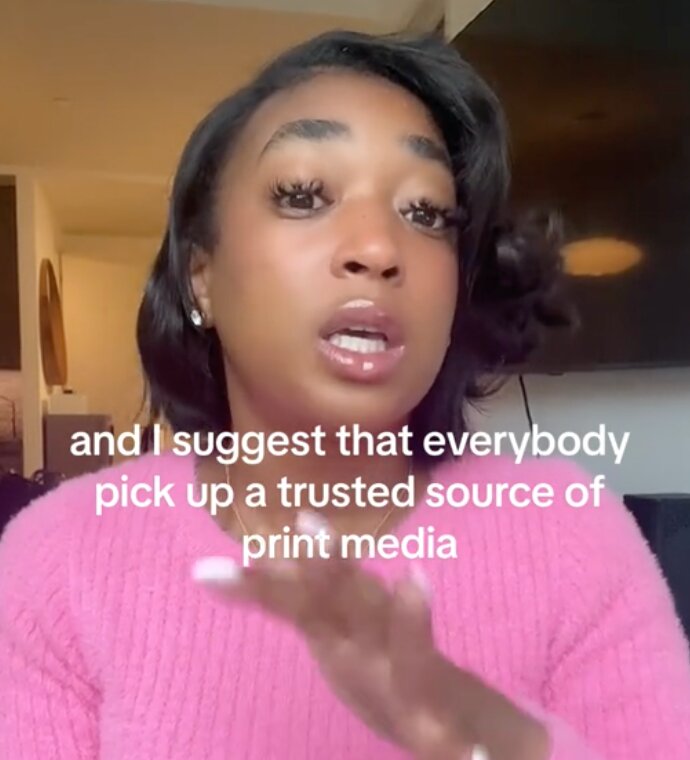
Meet TikTok’s “Print Princess,” Kelsey Russell, who leverages the platform to introduce her audience to news of the day; how to be critical about what they read; and how print can give us a break from screen time, as well as help us more meaningfully consider and retain information.

https://www.editorandpublisher.com/stories/meet-the-print-princess-tiktok-personality-kelsey-russell-uses-social-media-to-spark-critical,250283

Book Publishing, Music, TV, Radio, Audio

Rebel Girl

I preordered Rebel Girl: My Life as a Feminist Punk by Kathleen Hanna. I felt it mandatory reading. I’d listened to the band(s) back in the day. I was fascinated by the lore and that Kathleen married my second favorite Beastie Boy. I wanted the backstory on it all, especially what it was like to be a woman in a band in the midst of a nearly all-male punk moment. I certainly knew what it was like to be a woman in the clubs, basements and warehouse shows where women were relegated to the perimeters by virtue of slamming male bodies and fear of being trampled or groped. 

What I didn’t know to expect was the constant struggle, the poverty, the family dysfunction, the sexual abuse, the rapes, the violence, the loneliness, despair, the anger and hatred (especially from other women), which Hanna reveals in bite-sized chapter chunks. Sometimes it’s all you can swallow before snapping the cover shut and trying to process it, wondering how the author ever did. 

Did she? 

Can you? 

It’s a question I ask myself all the time. Do we actually heal? Or do we just learn to be temporarily okay in the moment and then string those moments together to make a day, a week, a year, a decade, a lifetime? 

Hanna’s storytelling kept me captivated. I read the book in two days. After all, it’s what a memoir should be — raw, candid, honest and deeply introspective. 

TV, Radio, Audio

Apprenticing the emperor (sans clothes)

Slate published an article today, written by Producer Bill Pruit. It’s a behind-the-scenes look at The Apprentice and the subsequent cult of personality it created with clever editing, flashy production, and seemingly earnest, eager contestants willing to do anything to get a chance to work alongside the guy with his name on all the buildings. 

It probably doesn’t come as a surprise that the revelations of the article reveal Donald J. Trump’s toxicity, racism, sexism and narcissism. We’ve all seen these traits on international display, including Trump’s proclivity for insults, retribution and sadism. It doesn’t surprise me at all to learn that he flippantly used slurs, including the “N word,” especially after what he did to the “Central Park Five.”

No, none of this “new information” surprises me. 

What does surprise me is the longevity of The Apprentice. Mark Burnett unquestionably has the secret sauce for long-run “reality” shows. Despite little tweaks to the Survivor game and casting, it’s still the same format as it was 24 years ago when it was novel. And people still watch it and want to be on it. 

But The Apprentice was a different animal. 

In 2004, I tuned in because I liked the concepts — the challenge of creating and championing a product or service; how to target and hone its marketing; how to hustle; how to multitask; how to work as a team; how to defend your decisions and your work; and how to ensure your own survival in a cut-throat business environment. 

But as an astute watcher from the beginning, I almost immediately spotted a pattern from week to week and across the first few seasons: Donald Trump was a lousy businessman. That fact played out in the real world over decades. He notoriously leveraged the bankruptcy courts to stiff vendors and employees, while preserving what empire remained. He published a bestseller he hadn’t written, and according to the ghostwriter, he likely never read. He cut corners, grifted, sold people inferior products, and cheated at every turn.

He is one of the few — if not the only — casino owners who actually lost money on those enterprises. That’s an astounding feat of failure.

And it became clear as he sat center stage at The Apprentice’s ominously illuminated conference room table, that he lacked even the most fundamental business insights. From week to week, he showed glaring inconsistencies in those principles — favoring honesty one week, rewarding deceit the next; espousing the virtues of creativity in one episode, only to scold the most out-of-the-box thinking the next. 

In most episodes, it seemed that it didn’t matter how the contestants performed their tasks; who stayed and who got fired appeared more about who made the best television for one more week — or, even more cynically, how they looked.

Trump himself shined only in the moments when he was doing what he does best — grilling people, shaming them, making them grovel and beg, and of course stoking his own ego. And that made for good reality drama for a while, but I think for actual business people, it fizzled quickly. It certainly did for me, and I tuned out after a few seasons — annoyed that I’d invested as much time as I had in the show.

The Celebrity Apprentice, which ultimately replaced the original format, extended the show’s life by virtue of well-known contestants and a charity payout. But the fundamental problem with the show endured: Trump was an unpredictable, bloviating showman, but not an executive of any measurable caliber. 

News & Publishing, Politics & Public Policy

The New York Times assembles a trust team

Among our news community, we frequently talk about “trust in news” and how it has eroded to dangerous levels. I’d suggest there are myriad reasons for that, including some that date back centuries. The press has always been a convenient punching bag. When people don’t like what they read, they naturally want to discount the information. 

Some of the phenomenon is patently new, as we’ve seen with the increase in “lawfare” suits designed to chill journalists and shutter news organizations outright. There’s also the toxic political rhetoric, even shouted from the highest offices in the land, expressly to make people doubt watchdog and accountability reporting. 

Now, we’re contending with Artificial Intelligence (AI), too, which is training people to doubt what they read and view.

Some of it is well-deserved. The press doesn’t always get the story right, especially in the rush to report first. Quality journalists among the American media are contrite when it happens, acknowledging their mistakes and offering corrections or retractions. Far too many outlets masquerading as trusted sources of news peddle misinformation and never acknowledge their failures to report accurately. That’s harmful, industry-wide.

I’d suggest the public also has a cynical view of how news is gathered and produced when they hear about strategic misdeeds, such as tabloid-style “catch and kill” stories — for example, when an adult film actress’ story about an affair with a politician never sees the light of day because the publisher and the porn star are paid to suppress it. It’s easy for the public to conflate that kind of “news” with what earnest, professional journalists produce day-in, day-out. 

Indeed, there are many reasons — deserved and not — for the lack of trust in news today, but the important thing is that we’re thinking about it as an existential threat and doing our best to counter it. That’s why I’m bullish on The New York Times decision to convene a “trust team” that’s keenly focused on this issue. 

At the link, read about my conversation with Edmund Lee, editor of The Times’ trust team and one of the ways they’ve built more transparency and familiarity into the display of news.

#newsmedia #journalism #TheNewYorkTimes

News & Publishing, Politics & Public Policy

Behind the scenes of Pulitzer-awarded reporting

Ever wonder what it takes to produce Pulitzer Prize-winning journalism? I spoke with reporters and editors at three newsrooms that were awarded Pulitzers earlier this month. They spoke about the inspiration behind their award-winning series; the labors and resources the projects required; the dilemmas they faced during the news gathering; and ultimately, the impact. 


Read the “stories behind the stories” at the link.  Congratulations to all of this year’s Pulitzer winners. https://www.editorandpublisher.com/stories/pulitzer-story,249969

News & Publishing, Politics & Public Policy

On Noonan, philosophy, protesters and newsroom representation

I was talking to some Boomer-generation family members not long ago, who’d expressed frustration about the state of the world — not about big things, like war or the state of democracy, but about small, comparatively insignificant things. They complained about how nothing interested them on TV anymore, about the popularity of Taylor Swift, and how print menus had been replaced by QR codes. These grievances seemed petty to me, so I found myself imparting wisdom I gained far too late in life: “Not everything is made for you,” I told them.

It dawned on me that if you see things in the world in two categories — things you like = good; things you don’t like = bad — you’ll live your life in a state of perpetual frustration or agitation. It’s a far more pleasant existence to think, just because I don’t like something — just because it wasn’t produced with me as an audience or consumer in mind — doesn’t make something bad, unworthy, corrosive or a danger to society. Other people may like it, and they have a right to enjoy it and to exist, and it need not have any impact on you at all. 

This same philosophy can — and should — be applied to people and lifestyles, too.

I thought about this as I read reporter Peggy Noonan’s account of attempting to interview protesters on Columbia University’s campus. She wrote about how they didn’t want to talk to her. “Friends, please come say hello and tell me what you think,” she implored them.

Frankly, if that’s how she approached the students, I wouldn’t be a bit surprised that they opted not to speak with her. “Friends …” does make it sound a bit disingenuous, like someone trying to draft you into a religious sect.  

Journalist Peter Baker of The New York Times boosted Noonan’s remarks on X/Twitter, implying the students wouldn’t speak to her because they weren’t capable of articulating their reason for protesting. 

That’s an assumption journalists are trained not to make. Also, it’s likely not true. Just look how poised, thoughtful and resolved this student was when speaking to Fox News: https://twitter.com/justinbaragona/status/1786088434806792573

Last week, when I spoke with several editors of school newspapers on campuses around the country, they all talked about students’ reluctance to speak to the press. 

You can read the article, “When war abroad comes to campus” for FREE here: https://www.editorandpublisher.com/stories/when-war-abroad-comes-to-campus-student-newspapers-meet-the-moment-with-on-the-ground-coverage-of,249586

The editors explained to me that the student protesters — in fact their entire generation — is media savvy but also distrustful of the press. They worry of their remarks being misunderstood or intentionally misconstrued. They’ve grown up in an era in which “fake news” is a familiar concept and social media can make one inarticulate remark take on a life of its own. 

Anish Vasudevan, the editor-in-chief of The Daily Orange at Syracuse University, explained how student protesters on campus have designated “media-trained” spokespersons expressly for these reasons. 

As I spoke with these student journalists, it also confirmed how much newsroom “representation” matters today, especially among young people. They’re more inclined to feel seen, heard and understood when they’re talking to reporters who have some shared perspective, whether that’s ethnicity, gender, geography, race, language, education, a common campus, age or generation.

In many cases, student reporters were able to land the most meaningful interviews with their fellow students, because representation matters. It helps repair some of the deteriorated trust in news media when we see ourselves represented among the storytellers. 

Maybe this story — this moment in history — isn’t for journalists like Noonan or Baker to chronicle. And that’s ok. 

Not everything is made for you.