I believe divine intervention happens in library stacks. Something beyond a captivating cover leads you to certain books that you didn’t even know you wanted to read. During my last library visit, I left with two surprisingly related titles in my book bag — one nonfiction, one fictional:
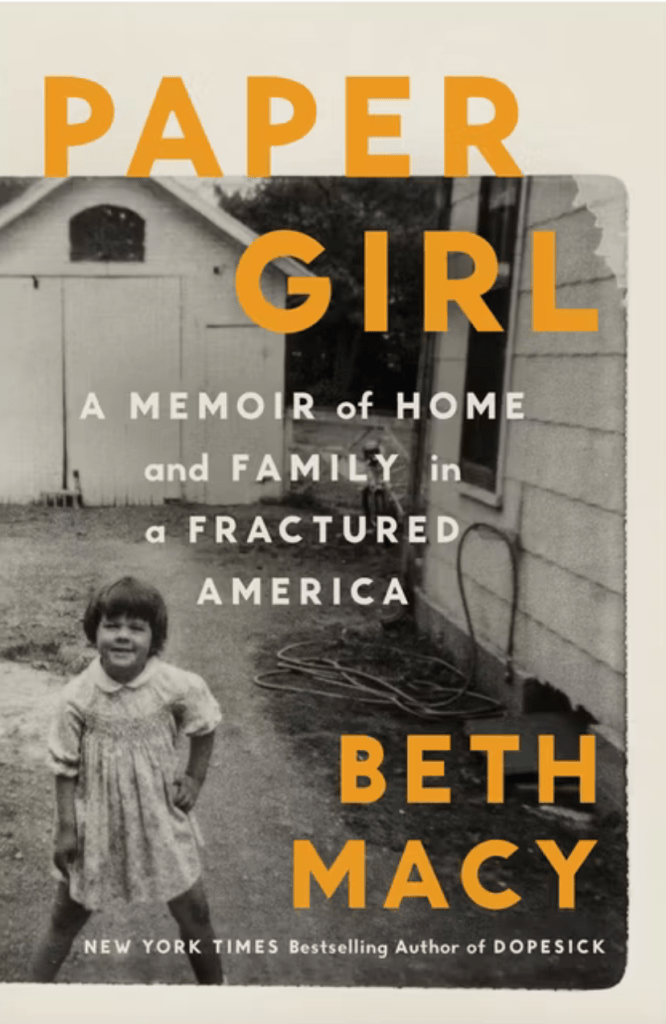
Paper Girl: A Memoir of Home and Family in a Fractured America, by journalist Beth Macy, recounts her reflections on Urbana, Ohio, her hometown.
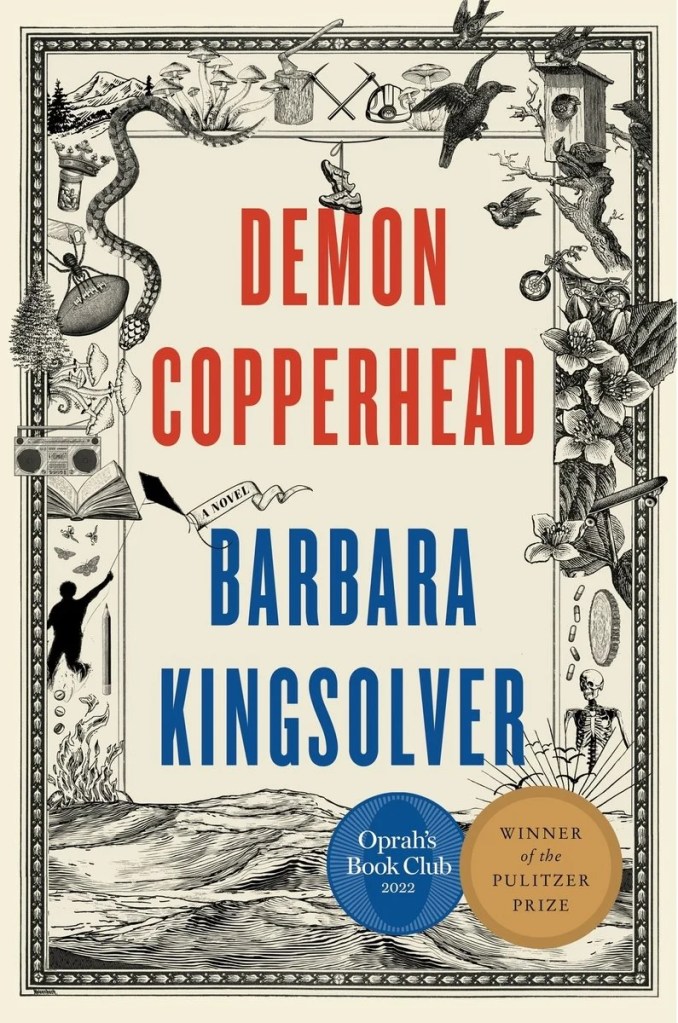
And Demon Copperhead, by Barbara Kingsolver, which is a retelling of Dickens’ David Copperfield, set in Appalachia during the height of the opioid crisis. It earned the Pulitzer Prize for Fiction in 2023.
Both are stories about places where hope dissipates over time and across tragedies. Jobs move out. Drugs move in. Despair abounds. Local newspapers shutter, while social media conspiracies run rampant. Politics becomes pastime and pew fodder.
Education becomes devalued. Truancy goes up. For example, in Paper Girl, Macy recounts how Ohio lifted the rules and benchmarks for home-schooling students. Parents struggling with their own addictions and paying the bills simply took their kids out of school while providing no formal education at home, essentially ensuring a generation of drop-outs and if-they’re-lucky minimum-wage earners.
Even with best-laid plans, people in communities like these run the risk of becoming mired in their circumstances, not by virtue of geography but by fear and poverty. Both stories articulate how often it takes aligned stars to escape — someone to see you, someone to recognize your talent, someone to believe in you, someone to give you a fair shot, plus a little dumb luck.
In both books, I recognized glimpses of my own hometown in the late-1960s and 1970s. It was easy to circle the drain there if you were a teenager. We spent our weekends at the skating rink, or cruising the downtown circuit in some senior’s car, drinking and driving (do not do this, kids), and getting loaded on whatever we could put our hands on — mostly dirt weed and liquor our parents wouldn’t notice missing from their wet bars. I smoked my first cigarette in my friend Pam’s attic bedroom when we were in 7th grade. I developed an affinity for weed and pills before I entered the 8th.
Now, kids contend with synthetic drugs and opioids, including cheap, accessible and deadly heroin and fentanyl.
In my hometown, one of the biggest events of the year was the town fair. There was a midway with rides, junk food and dizzying lights. As tweens and teens, we’d get high or drunk and walk around the fair every night for a week — our parents assuming we were off pigging out on fried foods and having wholesome fair fun. On one of those occasions, my friends dragged us into a fortune teller’s tent. For a few bucks, she’d read your fortune via tarot cards or a crystal ball like the Wicked Witch’s. When it was my turn, she snatched my cash and didn’t bother consulting either. She simply said, “You’re going to die before your 21,” and pointed me toward the exit.
That’s how far gone I was.
Much of my self-destructive behavior, I learned later in life, can be traced to childhood trauma I won’t recount here, but a lot of it was also culture. We had our share of kids who aspired, who got voted “Best This” or “Best That” in the yearbook, who played sports and avoided the allure of drugs, some whose parents socked away college funds as if it was a given.
But for so many of my peers, aspiration was as pragmatic as a daydream.
Like Journalist Beth Macy and the fictional Demon Copperhead, I had the good fortune of people who helped me transcend what could have been a wasted, brief life. There were my parents, who moved us out of the town — partly to be closer to their jobs in the D.C. suburbs, and partly to save me from the wrong crowd.
There was Debbie Riley, a court-appointed social worker assigned to me when I got busted for grand theft auto at 15 (I was a runaway who went joyriding in my friend’s brother’s car. He pressed charges, which were dropped on condition of counseling.)
Debbie Riley asked my parents to come to our first session. My father spent the hour red-faced and irate that he had to be there — and because he couldn’t seem to discipline me with tough love, nor keep me from running away from home. My mother sat stone faced and said nothing. She didn’t know what to say or do with me. At the end of the session, Debbie Riley told them they didn’t have to come to any more of our meetings; she’d meet with me alone from then on.
I never had to tell Debbie Riley about my childhood trauma, not specifically, anyway. Back then, I couldn’t have choked out the words. It took me decades to process it and to talk about it, even today, somewhat superficially. I don’t like to go too deep into those rough seas.
But it was like Debbie Riley — who probably spent every day with kids like me — could read me, or smell it on me. She knew I was broken and spiraling, but that I might be salvageable, if I wanted to be.
Way more than a decade before Robin William’s famous scene in “Good Will Hunting,” Debbie Riley took my hands in hers across her cold-metal police-department desk, and looked me in the eyes and said, “It’s not your fault. It’s not your fault.”
That scene with Matt Damon brings me to my knees every time. I see us in that moment, me and Debbie Riley — as much a breakthrough for young Will Hunting as it had been for me.
Just feeling seen lifted me a fraction of the way out of the dark pit. I started thinking about a future, about who and what I wanted to be. But I still had a long way to go.
(Spoiler alert: Beth and Demon make it out of their hometowns, too, though not unscathed.)
Sometimes the tides shift for communities like these. In the case of Urbana, new industry came to town, and there were jobs again and a little more disposable income, Macy recalls. That happened in my hometown, too. Washington, D.C.’s sprawl crept in, bringing with it new taxpaying residents who cashed big paychecks signed by defense contractors and lobbying firms. The main street transformed. No more drunken high schoolers cruising the circuit. No more 5-and-10 store once owned by my great-grandmother. Now, there were art galleries and microbreweries and restaurants with Top Chefs in their kitchens.
People who survived the leaner years now sit-pretty on homes worth 10x what they paid for them. But for so many rural communities, there’s no D.C. sprawl to swoop in like a superhero to save the day. And for too many kids, there are too few Debbie Rileys who care.
You may buy the books here, but please consider checking them out from your local library. One of the best ways to support your library is by signing up for a free library card and then using it.
Paper Girl: A Memoir of Home and Family in a Fractured America, by Beth Macy
Demon Copperhead, by Barbara Kingsolver




 Gretchen A. Peck