For 20+ years, I walked and drove by Philadelphia’s iconic City Hall. I had one of my most memorable occasions in its heart — an open-air courtyard you can access from north, south, east and west. It was the day before Christmas Eve, and I’d gone to happy hour with some friends from work before we all took a few days off to celebrate the holiday.
We’d congregated at McGlinchey’s (RIP), a favorite dive bar on South 15th, and spent hours nursing beers and smoking, in defiance of the new rules prohibiting smoking in bars and restaurants. McGlinchey’s was like that, rebellious in spirit, old and dingy in décor. We shared laughs about office antics, and as the evening wore on, we turned our conversation to more serious topics, like religion and philosophy, the meaning of life.
It came time to head home. My best friend from work and I linked arms with another coworker and strolled through Center City, into City Hall’s south entrance and headed toward the courtyard. In its center, stood Philly’s version of the Rockefeller Center Christmas tree. It was towering and glorious. Its magnificence brought our trio to a halt, and we stood there, silent, arm-in-arm staring up at it.
“What time is it,” someone asked, breaking the silence and the spell.
“Almost midnight,” came a reply.
Just then, it started to snow the most perfect, fluffy, big-flaked snow imaginable. We stood there a little longer, looking up, catching the snow on our knit hats and eyelashes. It felt … quintessentially Philadelphia.
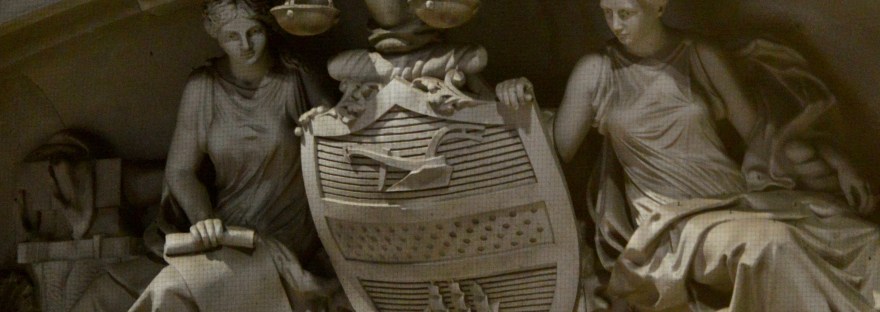
So, I’ve long been an admirer and frequent passerby, but I’ve never gotten a keen look at the building’s remarkable detail. Recently, I returned to Philadelphia and had a bird’s eye view of the east side of the building from my high-rise hotel room — close enough to get a long-lens view of some of the remarkable sculptures adorning its façade. There are 250 statues, reliefs and caryatids created by sculptor Alexander Milne Calder, adding intrigue and storyline to the historic building.
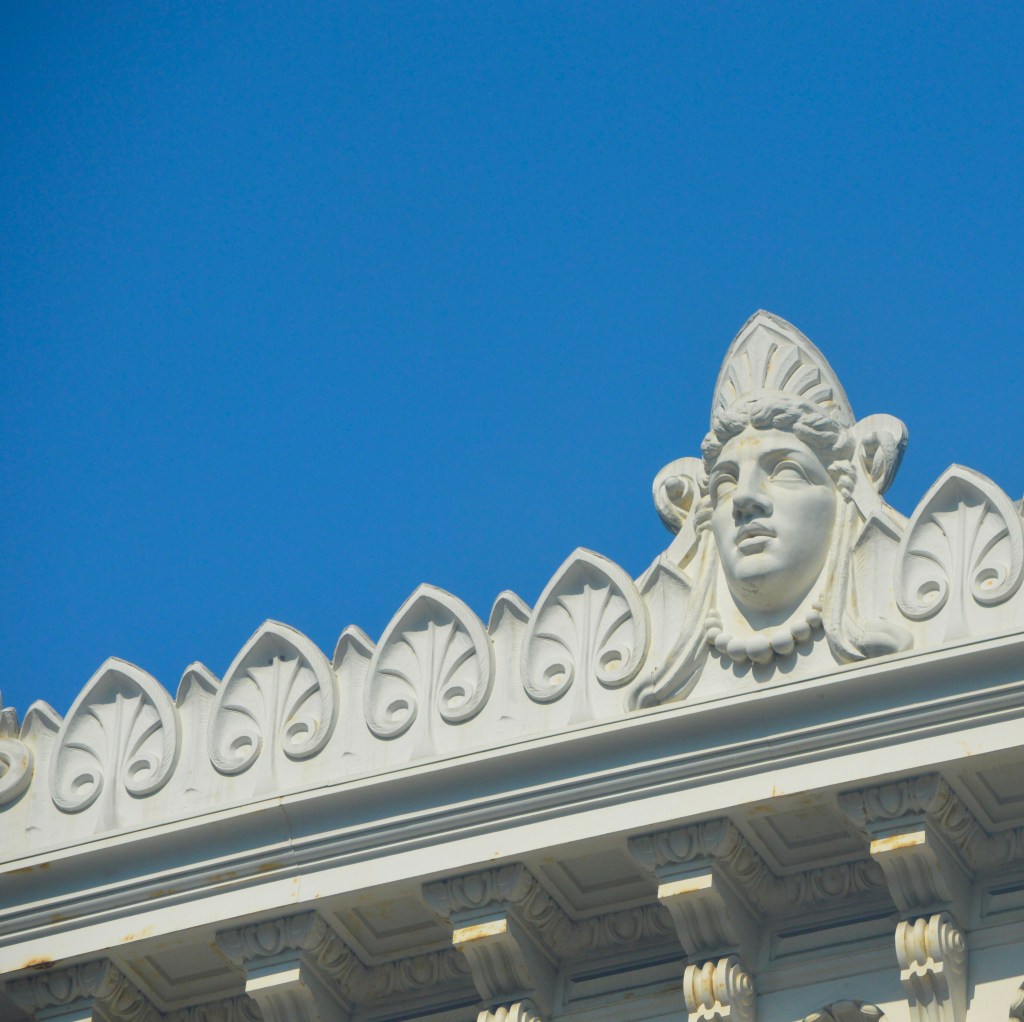
The statue of William Penn that tops the highest tower is made of bronze and is itself 37 feet tall and a formidable 53,000 lbs. I’ll never forget seeing it sporting a Philadelphia Flyers sweater in 1997. Until 1987, when One Liberty Place debuted on the scene, “Billy Penn” was the tallest point in all of the city. These days, Comcast’s imposing towers dwarf City Hall.
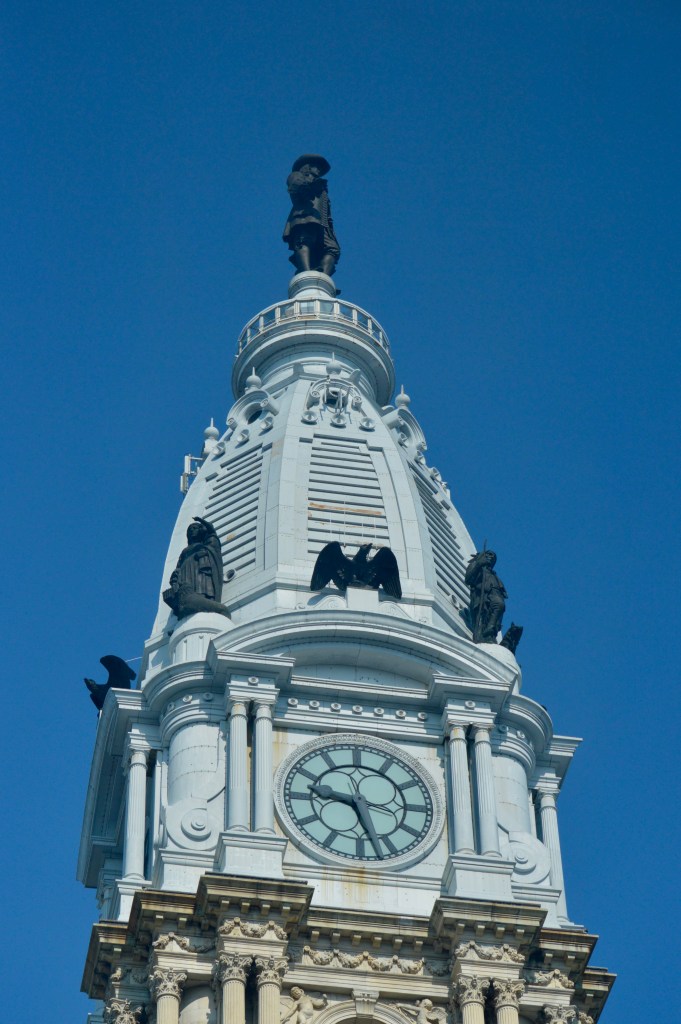
In the 1990s, scaffolding surrounded the clock tower and Penn’s statue. The City had invested in a multimillion-dollar cleaning project. When the scaffolding came down, the tower was a completely different color than the rest of the building, nearly white next to the building’s stone and its sooty patina. I mistakenly wondered if the city had run out of money for power washing the rest of the building, content to keep the two-toned look. But that’s not at all what happened.
While the rest of the building is constructed in granite and marble, the tower is made of cast iron. It had rusted, necessitating the restoration. Naturally, it would be a different color than the stone. As you can see from the daytime photos, rust is starting to return.
Knowing how heavy cast iron is, imagine the feat of hoisting it into place in 1894!
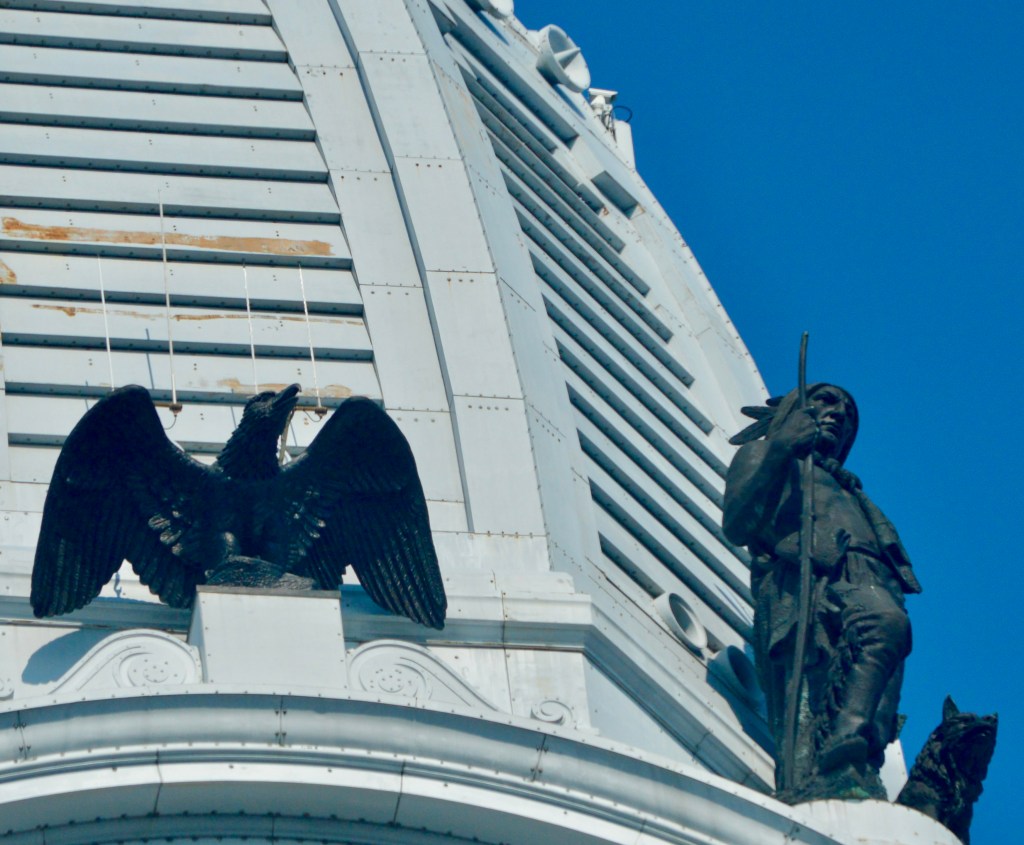
The clock tower surrounded by eight bronze statues, including a Lenape man and his hunting dog, and four bronze eagles facing north, south, east and west.
Calder’s statues depict people of different races — immigrants practicing new trades and professions in their new land.
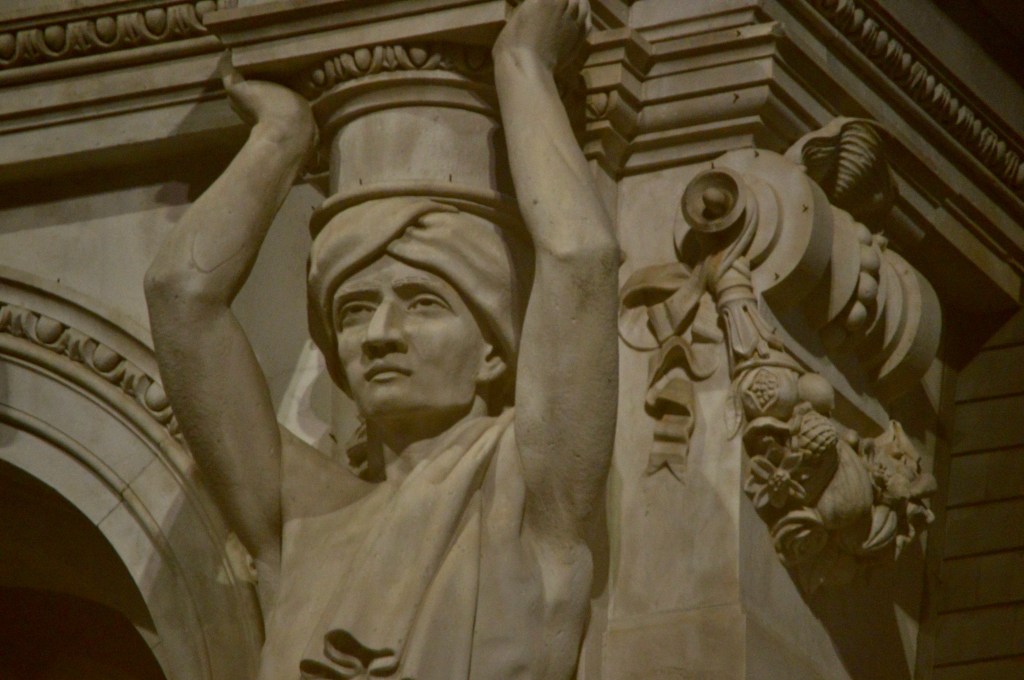
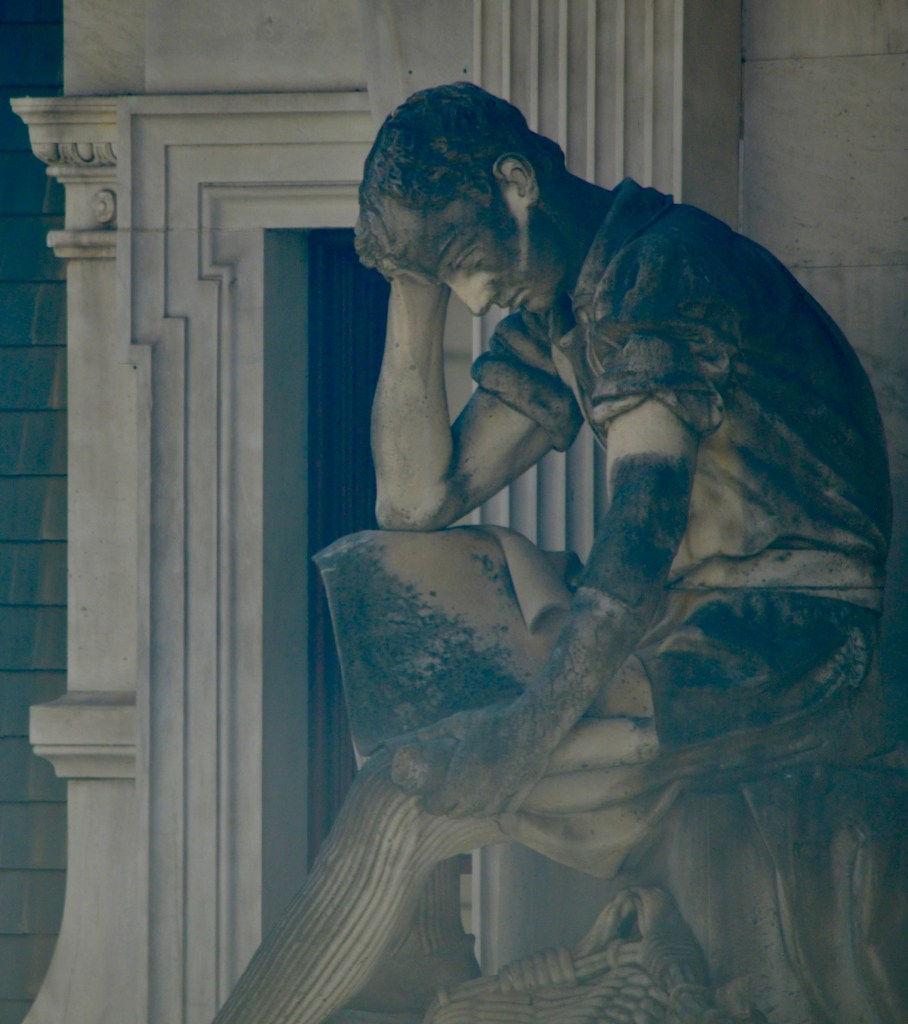
The marble’s patina mimics the stained limbs and attire of a pressman. Photo: G.A. Peck
Besides statues of people, Calder also incorporated animals into his designs. This elephant looks out over Juniper Street, and you’ll also find a tiger, camel, bison, bull, horse, and a group of cats chasing a mouse among the sculptures.
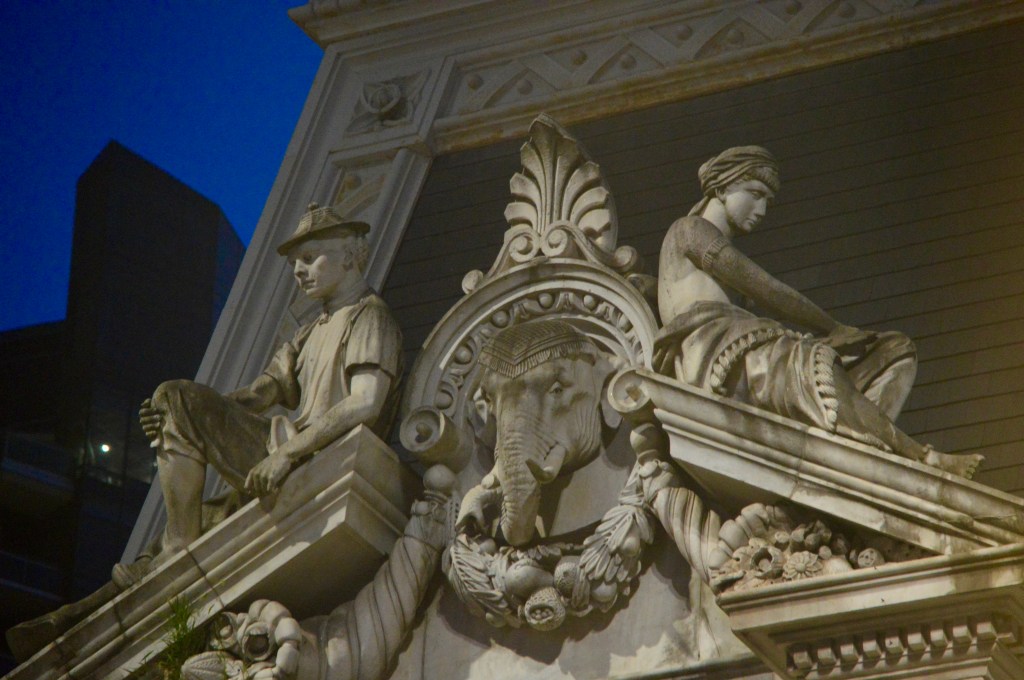
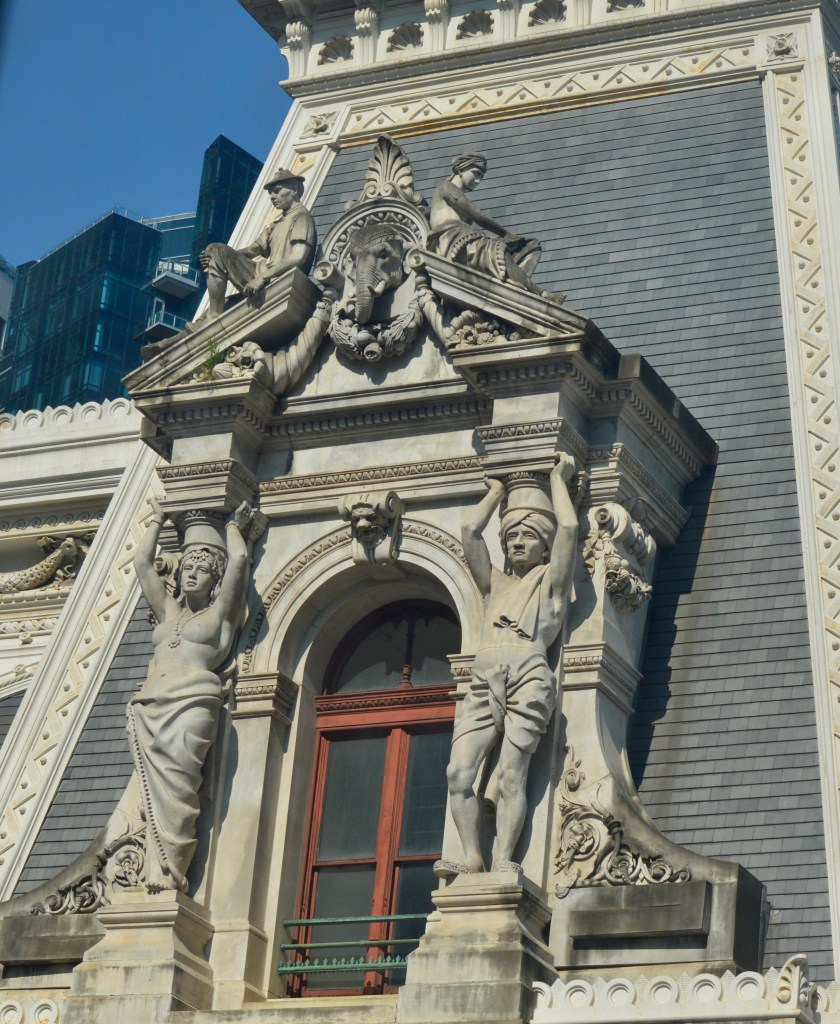
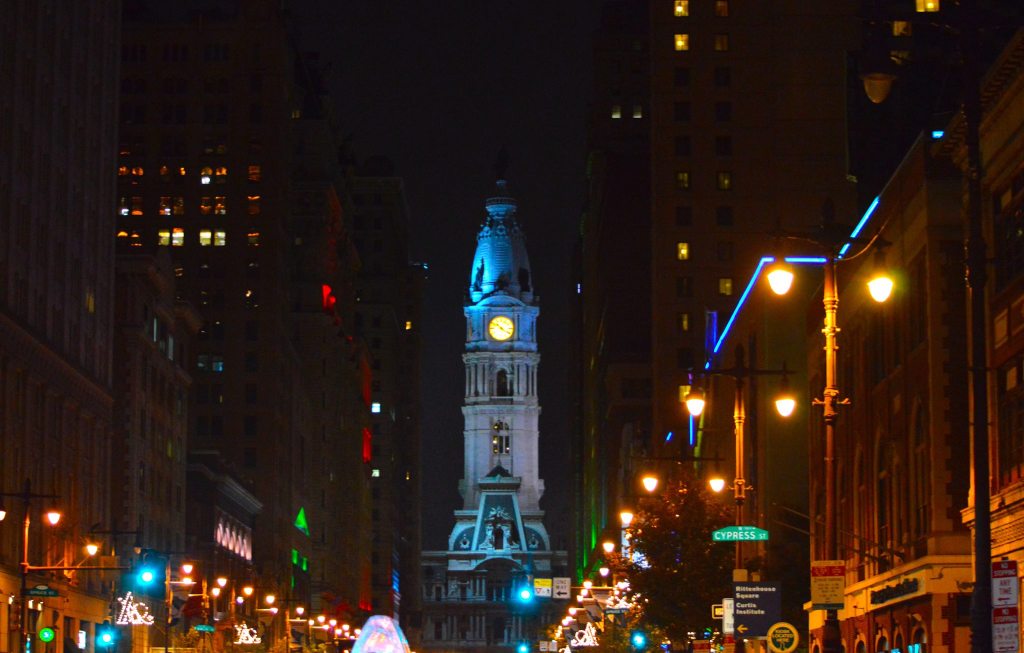
The building takes on a different quality at night, its angles and curves accented against dark sky. To keep the structure unencumbered by lights and hardware, City Hall is illuminated at night by 222 color-programmable LED spotlights mounted on 10 neighboring buildings.
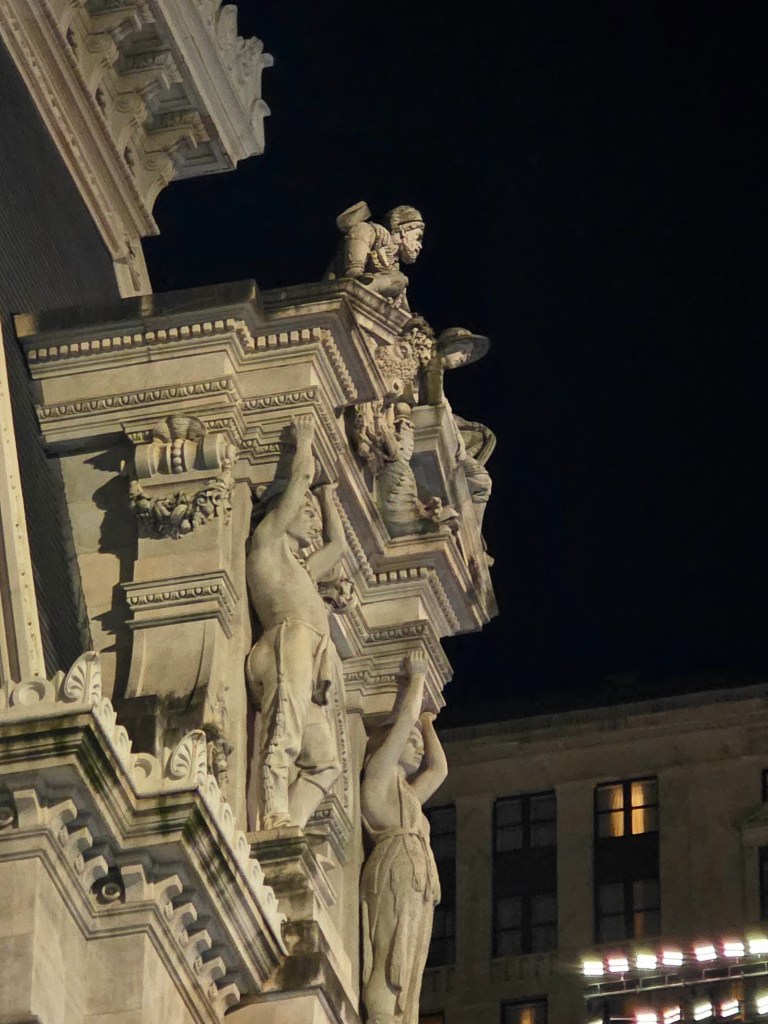
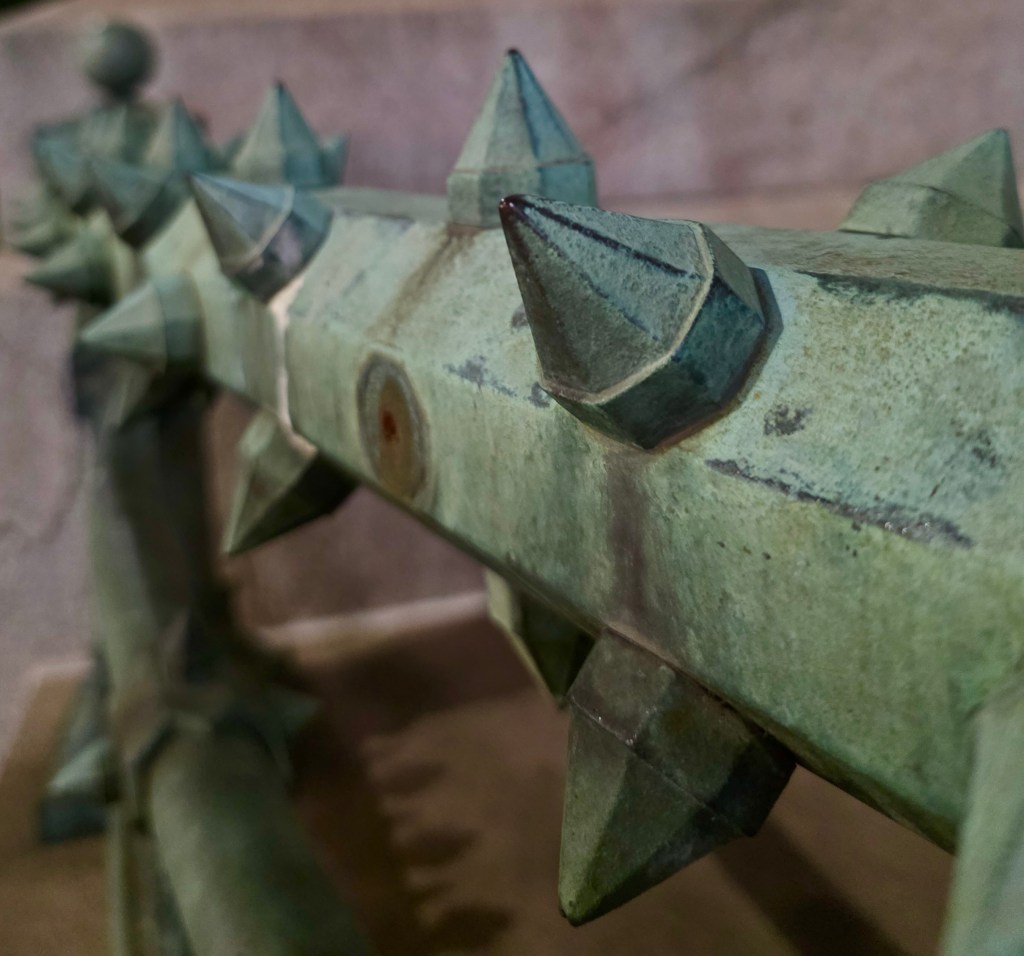
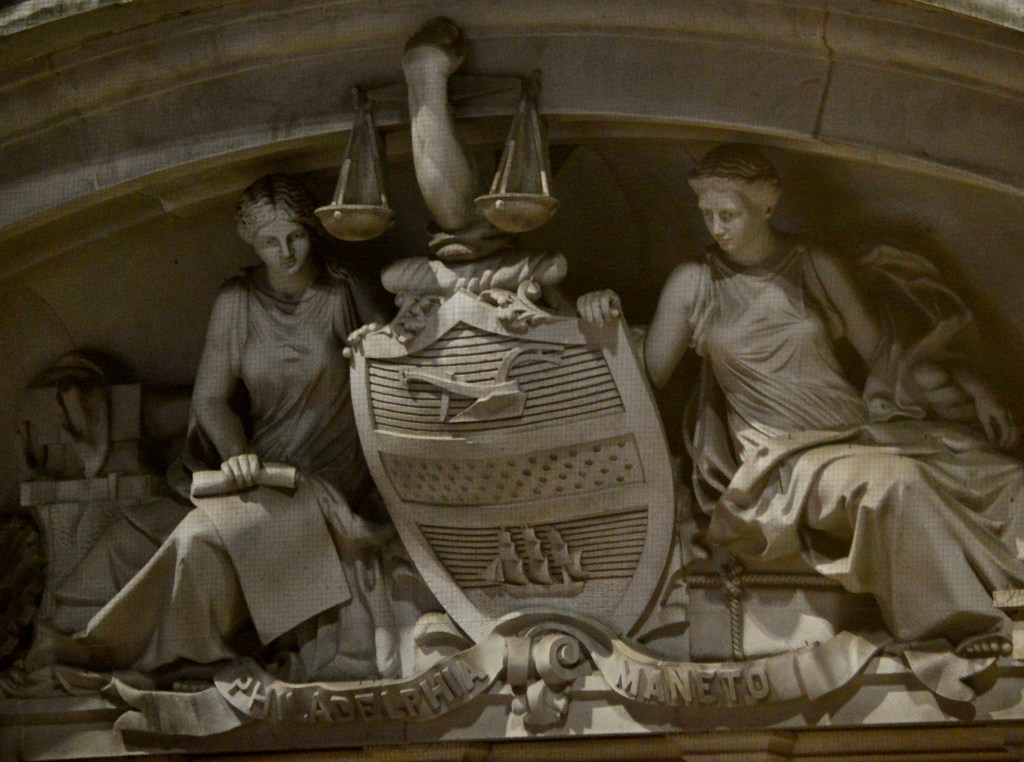
The country could use more of that spirit today. Photo: G.A. Peck


Really enjoyed this closer look at Philadelphia City Hall. The architectural details and the William Penn statue are easy to miss when you’re simply walking through Center City, so it’s interesting to see them highlighted up close. The building looks especially impressive at night with the lighting. Thanks for sharing the history and photos!
LikeLike