Some of the best Italian restaurants in Philadelphia are those you’ve never heard of. They have a small footprint, are intimate and cozy, with just a few tables. I’ve found that’s usually a good gauge of a great restaurant—symbolic that the focus is on quality rather than volume. They’re local-favorite spots, where families cook recipes passed down generations, and the vibe is spirited, familiar and comforting—like you’ve met up with some friends from the neighborhood to have a bottle of wine and some delicate handmade pasta ladled with Sunday gravy.
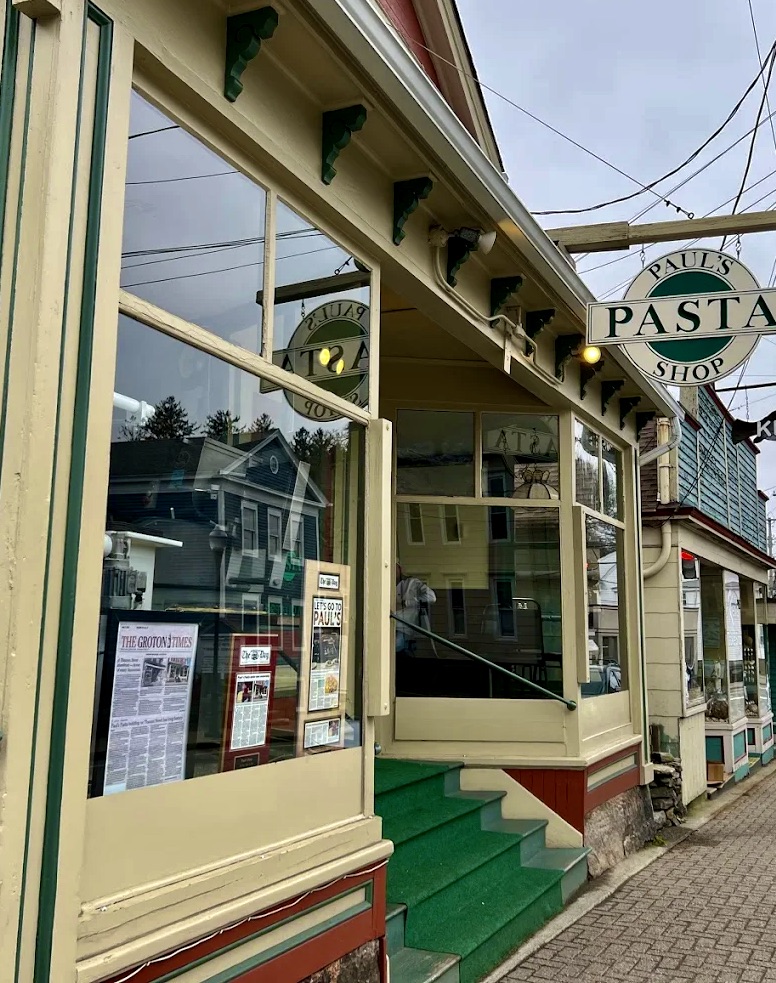
That type of culinary experience has eluded us since moving from Philadelphia more than a decade ago, until my husband and I discovered Paul’s Pasta Shop, right on the shore of the Thames River in Groton, Connecticut.
Though it was acquired by TyMark Restaurant Group in 2023, the restaurant still carries the name of its founder—Paul Fidrych. Partnered with his wife, Dorothy, Fidrych opened the restaurant in 1988, with a mission to deliver “fresh cooking and warm customer service.” Under the new ownership, the restaurant still makes good on that promise.
The dining room is tightly packed with green vinyl-covered tables, and there’s a covered deck out back, overlooking the Thames River. The menu is simple. They’re known for homemade pasta, simple green salads and a tempting dessert case. My husband tends to opt for the nightly specials, like linguini with shrimp, artichokes and sundried tomatoes. I tend to go for the house-made ravioli. You can order cheese or meat filling, or a few of each. It’s a great meal paired with a half-carafe of table wine, a basket of garlic bread and a simple house salad with the perfect amount of honey poppyseed dressing.
A half-size order of house-made cheese ravioli, topped with marinara sauce at Paul’s Pasta Shop in Groton, Connecticut. Photo: G.A. Peck
Their specialty is “spaghetti pie”—an enormous wedge of pasta, vegetables, cheese, sausage, pepperoni and sauce, baked in the oven until it develops a crust. I’m not brave enough to order it. It’s massive and requires a commitment. I’ve seen entire tables of Navy and Coast Guard service members order them and tap out halfway through. Makes for good leftovers, I bet.
The marinara sauce varies a little each time, but that’s how it goes in the kitchen, after all. Even precise recipes are subjected to variables, like the quality, season and sweetness of the tomatoes.
Is it the best marinara sauce I’ve ever had? No. But I’ve been spoiled on South Philly Italian; it’s an extremely high bar. But it’s a decent sauce; you’ll want to sop up any extra with the garlic bread.
The restaurant is approachable, unpretentious, homey. Locals wave to one another as they come through the front door. It’s particularly comforting to sit in the bustling dining room on a cold winter’s night, when you’re glad for the fellowship.
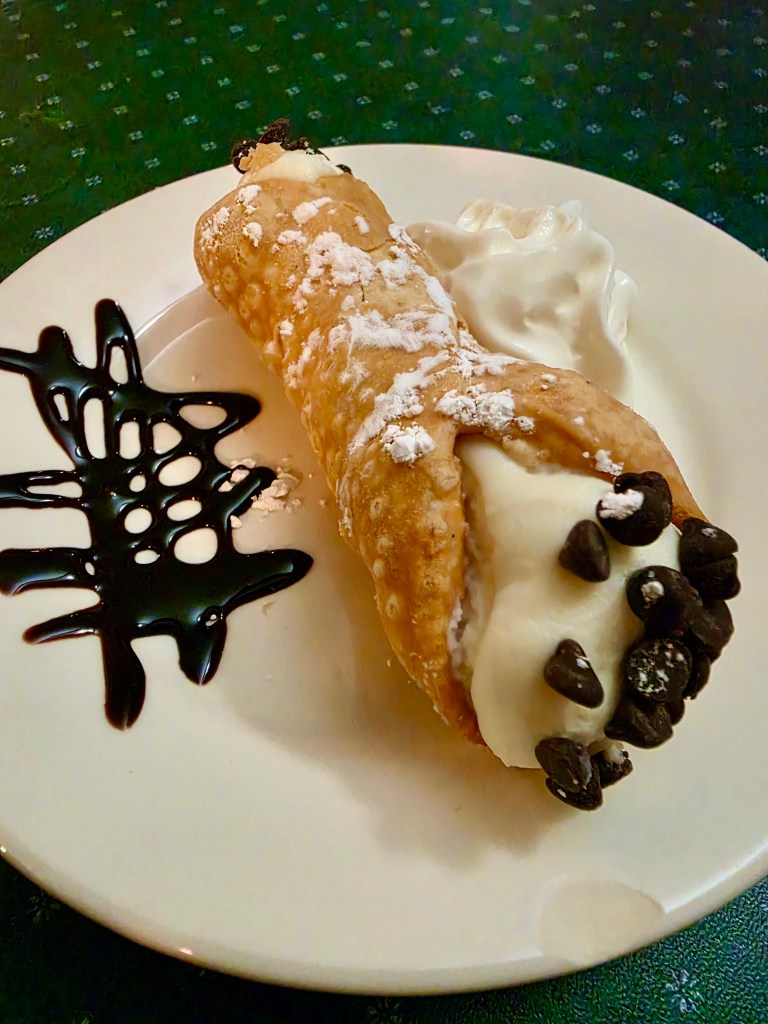
The staff is flawlessly friendly, and the service is quick. Pro tip: If you want cannoli for dessert, order them with your meal. They sell out fast.
Cannoli at Paul’s Pasta Shop in Groton, Connecticut. Order early, because they sell out quickly. Photo: G.A. Peck
Not long ago, we pulled off the highway and stopped in for dinner, and on our way out, we paused at the front of the store, where the manager, Mike, was making fresh pasta. We explained how we’d gotten into making pasta by hand at home, and he gave us some tips on dough and showed us how the commercial ravioli maker worked.
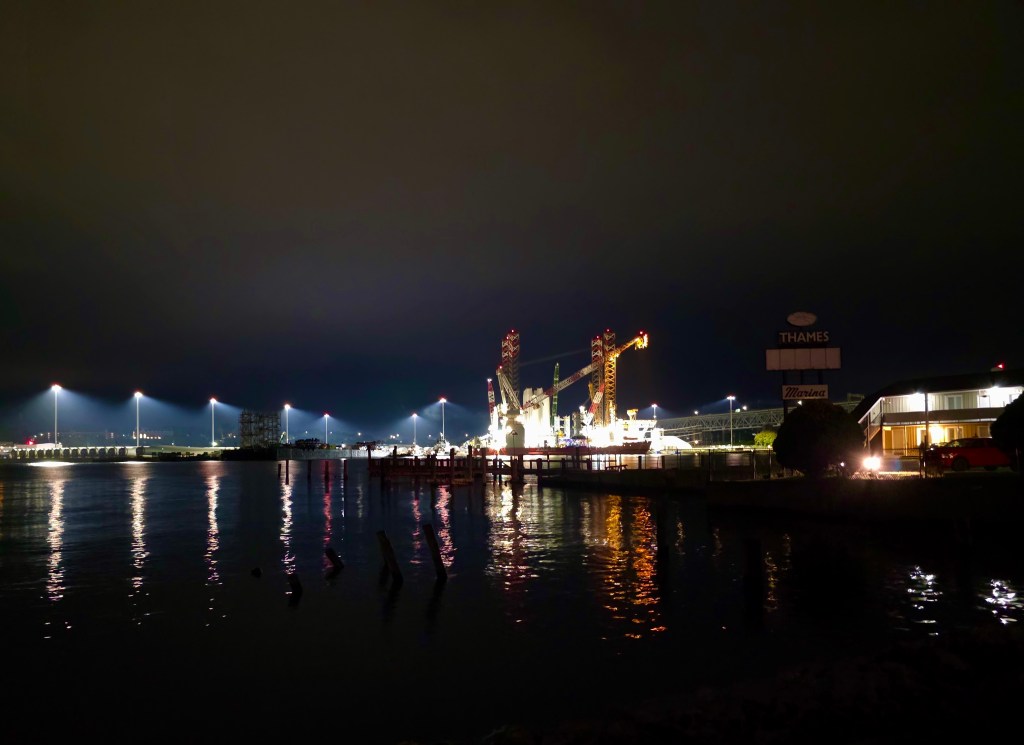
There’s limited parking behind the restaurant—right on the river, with views of the Gold Star Bridge, the State Pier, bustling with wind turbine industry, and the new Coast Guard Museum under construction in New London.
State Pier, a hub for wind energy development, is seen across the Thames River from Paul’s Pasta Shop in Groton, Connecticut. Photo: G.A. Peck
As we strolled to our car one night after a fair-valued perfectly satisfying meal, my husband declared, “It’s the closest thing to South Philly.” That’s a high compliment.
My husband and I celebrate our birthdays each year not with the exchange of gifts but with a special dinner out — typically at a restaurant we otherwise wouldn’t frequent on the daily. If the place has a chef’s tasting menu, we tend to gravitate to that.
Over the years, we’ve had some truly exceptional tasting experiences, and some that were so disappointing they ventured toward the realm of absurd. In Philadelphia many years ago, we chose Eric Ripert’s 10 Arts, where Top Chef-famous Jennifer Carroll was the executive chef at the time. It was a frou-frou place, in a beautiful old Philadelphia building, with high ceilings, thick moldings, heavy velvet draperies. Here, nouveau cuisine — coded language for tiny portions — reigned. There were perhaps six courses in all, all about a bite or two in size, none of which were particularly enticing or memorable. In fact, the only course I remember to this day was dessert — two tiny homemade marshmallows. Granted, this was before craft marshmallows became de rigueur, so credit to Chef Carroll, who was ahead of trend.
The server would present each plate with such flourish, but each time she’d leave, we’d lean in and whisper to one another. “Are we being punked?”
“Are there hidden cameras here? Is Allen Funt going to jump out from behind one of these beautiful curtains and say, ‘Smile! You’re on Candid Camera!’”
You could’ve dined using tweezers rather than forks.
We paid the comically expensive tab and resisted complaining to the server. After all, it wasn’t her fault. On the way home, we stopped at a takeout place on North Broad Street and got dinner to go.
Conversely, we’ve had some incredible tasting menu experiences — at Chef Jose Garces’ Amada in Atlantic City and his now-shuttered Tinto in Philadelphia. You can never go wrong with the tasting menu at one of Chef Morimoto’s restaurants.
For a milestone anniversary we spent in Paris, we dined at a restaurant then called Vivant. The man who’d rented us an apartment for the week recommended it, proclaiming it to be one of Paris’ best-kept secrets, especially from the throngs of tourists. This locals-favorite spot delivered perhaps the best meal I’ve ever had in my life. Each plate was delicious, gratifying and paired with a different wine. We left sated, fat and a little drunk.
Not long ago, I dined with a colleague at Boqueria in New York City, a tapas chain with a generous tasting menu option. There were so many courses, we almost needed a second two-top table to hold all the dishes placed before us. We each had no trouble choosing a favorite — the brussels sprouts salad for her, the albondigas meatballs for me.
A successful tasting menu should strike a balance between variety and, frankly, volume. The diner should leave the table feeling exposed to new culinary adventures while also feeling comfortably full from the experience.
This year, my husband and I chose The Essex in Old Saybrook, Connecticut for our co-birthday celebration. It’s a French-inspired, seafood-forward restaurant and bar, with an impossibly small, open kitchen. If you dine at the chef’s table (we didn’t), you’re treated to personal interaction with Chef Colt Taylor, who describes each course. Sit anywhere in the restaurant, and you can hear and see the kitchen team work, like a live episode of The Bear, without the cursing.
“Fire two filets, table 3,” the chef barks at the cooks on proteins. “I need runners now,” he calls out to servers when dishes are expedited and presentable. You get a sense of the hustle it takes to run a fine-dining establishment.
At The Essex, there are two main dining options — a prix fixe three-course meal, plus an amuse, salad and oven-fresh bread. Diners can choose from a list of starters, about five entrées and several desserts. We opted for the chef’s tasting menu, with nine courses, starting with an amuse-bouche and concluding with a dessert. The restaurant also has an excellent selection of craft cocktails. We settled on an oak barrel-aged Manhattan and an Apricot by Surprise (a vodka-based martini).
On this occasion, the tasting menu featured:
Amuse course:
A tiny teacup of Rosemary & Bergamot Apple Tea: A warm and comforting greeting as we came in from the cold, rainy night.
Four canapes:
1. Two pickled mussels with vichysoisse chile oil. These were intriguing, but also a bit of a tease. There were only two on a bed of empty mussel shells.
Pickled mussels and a taste of The Essex Clam Chowder
2. Parsnip & Apple “Flan”, a bite-sized cube that ate like an eggy custard, despite there being no egg in the dish, our server explained.
Octopus fritters and Parsnip-and-apple “flan”
3. Crispy Octopus fritters, on a bed of subtly sweet plum sauce.
4. A half-thimble of “The Essex Clam Chowder.” Almost enough to give us an actual taste.
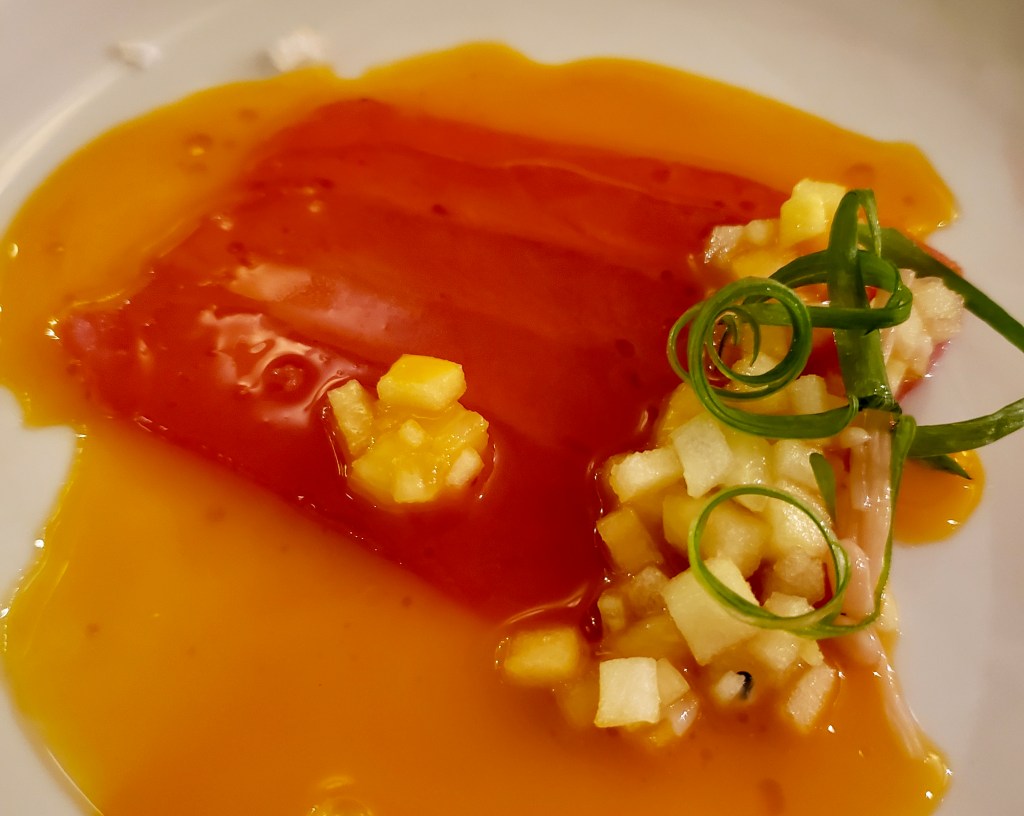
First course: Montauk Yellow Fin Tuna Cru, with sea buckthorn and pineapple ponzu. This was tender, bright, fresh, a menu highlight.
Second course: Seafood “Chowder,” with anisette, vermouth, black bass and clam. Probably our least-favorite course, it ate like a pudding and was cold by the time it was placed before us. Our server explained that we should dig into the bottom of the dish, where a single clam and a wedge of black sea bass awaited. The flavor surprisingly leaned to sweet rather than savory. Had it been served hot, it could’ve had the comforting effect of a congee or warm porridge.
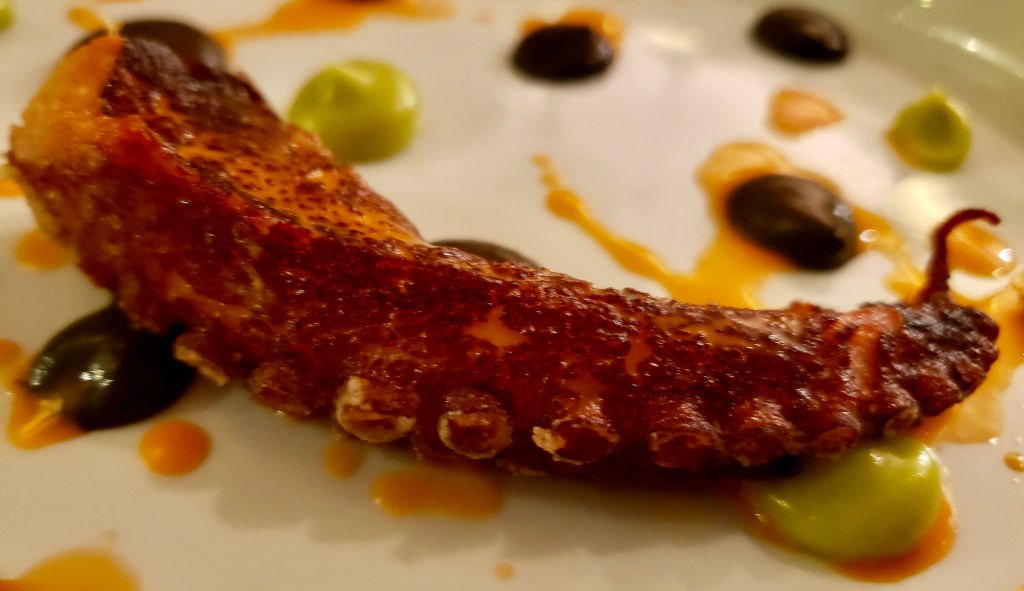
Third course: Charred Octopus a la Plancha, with dollops of black sesame, avocado and blood orange. Another menu highlight, the octopus was tender and paired well with the avocado, in particular.
Fourth course: Duck Tortellini in a beet, lemongrass and kaffir lime sauce. Delicate and delicious! The only criticism of this dish is that the sauce was so yummy, after the pasta was gone, there was nothing to soak it up.
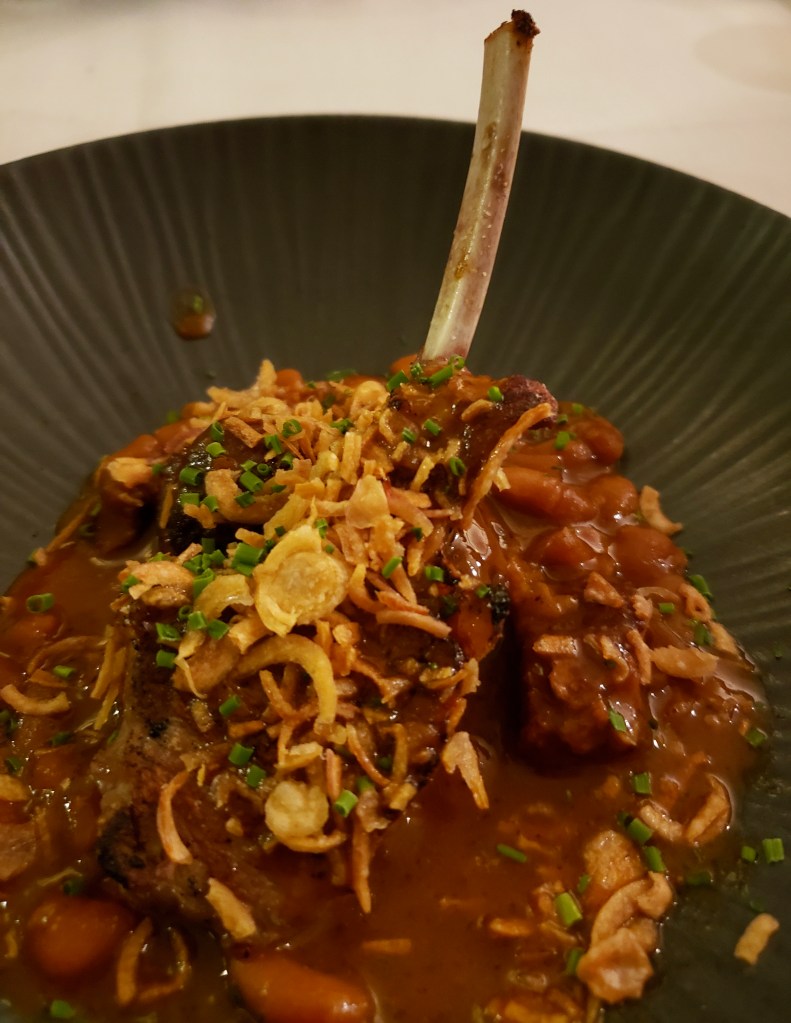
Fifth course: Lamb, with pork cassoulet, truffle and sauce périgourdine. I love a cassoulet — the very best version of “pork and beans,” in my book. This was a splendid version, with a tiny sausage, a melt-in-your-mouth chunk of pork, plus tender white beans slow-simmered in the sauce. It almost didn’t need the lollipop lamb chop, though the chop added to the dish’s height and texture for presentation.
Pre-dessert: Poached pear and sassafras sorbet.
Dessert: Flexi Ganache, with black cardamom and tarragon. This S-shaped chocolate ganache was served on a bed of chocolate sauce, with more powdered chocolate and white-chocolate (?) dots, sprinkled for color. Ours came with candles and a happy birthday song. We were the third table to celebrate December birthdays.
Post-dessert: We’d had plenty of sweets by then, but the server delivered four more bite-sized morsels to seal the meal, a sour patch-like tart fruit cube and a tiny take on toasted s’mores for each of us.
The standouts, we agreed, were the charred octopus, the tuna cru and the duck tortellini. In fact, I thought everything was delicious, if in teasingly small proportion. But my husband found the “seafood chowder” to be particularly distasteful — the flavor, consistency and cold serving temperature.
Though the chef came out from the kitchen and visited with other guests, he bypassed our table, so we didn’t have the pleasure of speaking with him about the menu or our experience. We would have expressed praises for our server, Peter, who was especially attentive and cheeky-fun.
As we finished our meal and drinks, we took notice of diners around us who’d ordered from the three-course menu. We coveted their simple green salads, warm bread and butter. The chef’s menu could’ve used one less wow dish (my husband would vote to nix the chowder) in favor of these simple pleasures. Overall, it was a pleasing experience. We didn’t leave feeling hungry nor stuffed, and we could name at least a few dishes that we relished and will remember.
The Essex is located at 247 Main Street in Old Saybrook, Connecticut.
I imagine Anthony Bourdain still thought of himself as a chef, first and foremost. Though he’d been out of the New York bar and restaurant scene for years, when he’d speak of his years in the kitchens he worked in or ran, you could feel how much he missed it (and also didn’t).
I don’t know if Tony ever really thought of himself as a writer, but that was his true talent. The world got to know Bourdain through his books and travel shows, through his adorable friendship with Eric Ripert. Destroying the image of a stoic, serious French chef, Ripert’s silliness and laughter was the perfect balance to Bourdain’s cantankerous, ever-curmudgeonly cynicism. Their love and admiration for one another was pure, accepting and enduring – the test of true best friendship.
When he fell in love and got married – despite his hard-boiled personality – it was reaffirming. When the couple welcomed a daughter, his joy bubbled.
When he divorced, his failure felt particularly heavy.
When he cursed like the saltiest of sailors, you felt the emotion in your belly, too.
I aspire to spit profanity like he did.
I admired Bourdain’s authenticity. A former addict – de rigueur in the restaurant world – Bourdain knew what it was like to live inauthentically, to be governed by secrets that enable addiction. Somehow, he found the courage and steel to regain control over its power. I suspect part of that journey is coming to terms with being human and flawed, and discovering that it’s okay to be so.
My favorite TV moments were those episodes when he’d travel to some far-off location and discover something about the people, land or cuisine that he hadn’t known. I appreciated that he was humbled by the impoverished and resilient people of the world.
So what you saw of Anthony on the small screen was who he was. When he was in pain, frustrated, confused, afraid, elated, in awe – when he had his mind blown – he shared it with the world. He was so beautifully authentic and real, and I wonder if it wasn’t this surreal world in which we now live that was his ultimate undoing.
I suppose speculation is a natural byproduct of suicide.
In the realm of food and travel writers, Bourdain was the best – truly unchallenged in his reign. Any hack – and there are plenty of them – can string together adjectives and use cliché phrases in an attempt to convey a flavor, a sensation, a setting, a sight.
Bourdain effortlessly connected all the dots between food, culture, geography, history and humanity.
He introduced us to the people of the planet, whom we’d never otherwise know or begin to understand. It was his special talent. He leaves us with a void, but I’m just being selfish.
Stardust now. New things to discover, perhaps. I’d like to think so. — Gretchen A. Peck







 Gretchen A. Peck