
Way, way back in grad school, I studied rhetoric—the art of using words to persuade. Ever since I’ve been fascinated by politics and oration, which brings me to our Presidential race: Trump/Vance v. Harris/Walz.

There are clear policy differences between the two parties. We can vote on those according to our values and priorities. But what’s notably distinctive is the tone of the campaigns.
One paints a picture of a dystopian America, a nation alone on the world stage, alliances be damned. Not just America First, but America Only. It’s a campaign based on grievances—personal grievances of the man at the top of the ticket, who spends his rallies disparaging people who don’t bend the knee in fealty or espouse his loosely held principles. It is a campaign that not only doesn’t extend a handshake to all Americans, it disparages them in cruel, incredible terms. It is a campaign that portrays too many Americans as “others,” to be feared, hated, prosecuted, persecuted, or worse. A campaign that describes the nation’s cities—our multicultural centers of commerce, technology and art—as hellscapes, and a campaign that reimagines the future of America in the regressive Project 2025. It’s a campaign replete with speeches pining for a dialing back to 2016, a dialing back on policy, on “settled” law, on rights, on innovation, on societal progress and intellectualism. It looks at humanity and showcases the worst of it. It is a campaign about retribution (Trump’s words). It is relentlessly angry.


By comparison, the other campaign strikes a tone that’s hopeful, aspirational, empathetic. You’ll find no “losers and suckers” admonishments in the deep cuts. It’s a campaign with a Presidential hopeful who is attacked—like so many women—for being accomplished and yet unapologetically happy. They call her “giggles” and “crazy” and “cackling” when she expresses joy.
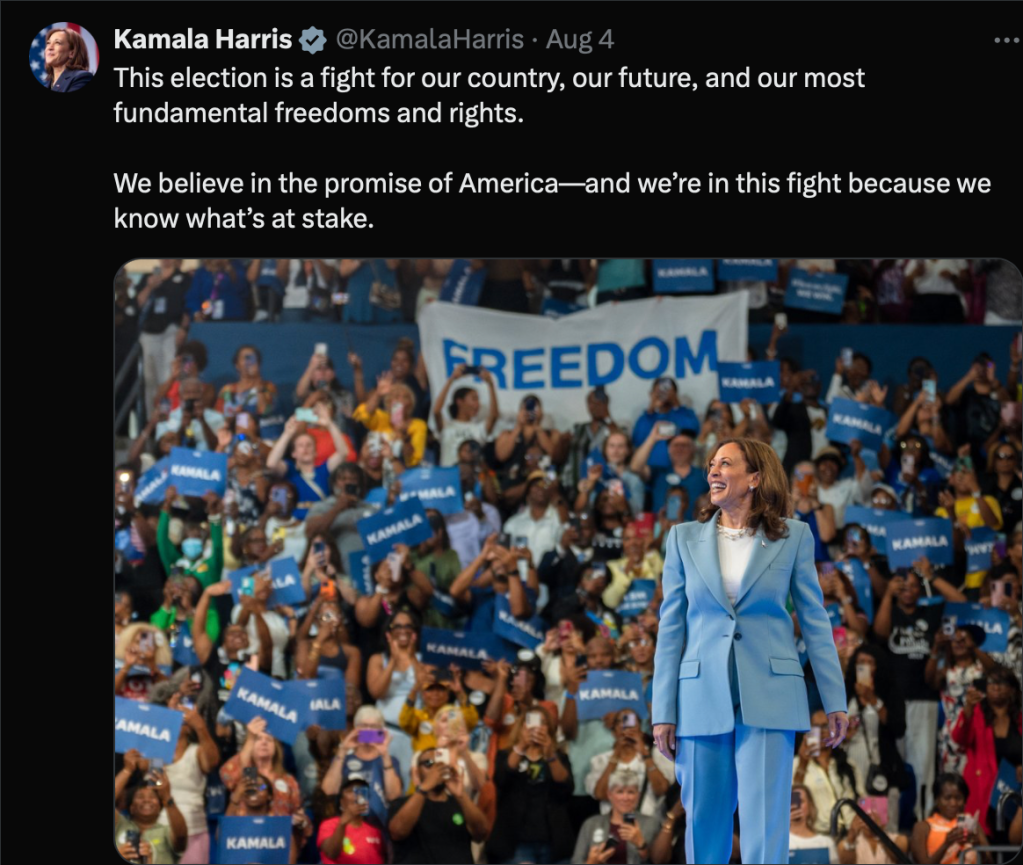
Now, she has a running mate, who seems happy, too—not pollyannish about what ails our nation, but excited for the prospect of their proposed solutions to heal them.
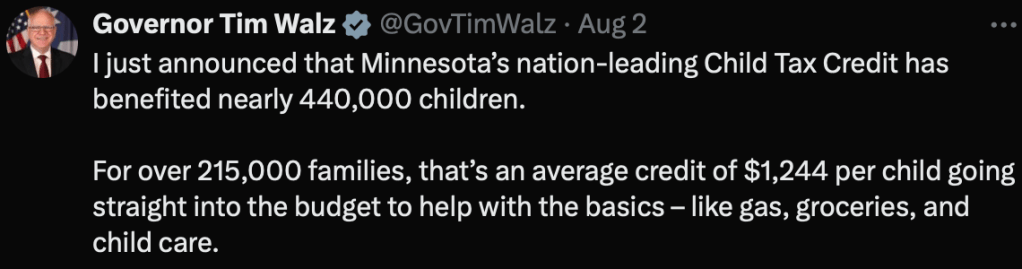
And unlike the falsely masculine rhetoric coming from the other campaign, this VP doesn’t hide his softness, his compassion. He laughs, and not at others’ expense. Hours old, this campaign already feels lighter, forward-focused.
So many Americans are politically exhausted and parched. They’re looking for the water source in that dystopian desert. And if you think a message of hope, aspiration and joy doesn’t sell in the nasty news cycle-obsessed world of modern-day politics, I give you eight years of President Barack Obama as evidence people find it refreshing, resounding and winning.


 Gretchen A. Peck